
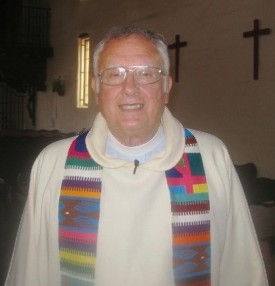
Rev. Dr. Roger Douglas 1932–2025
Priest, preacher, pastor, storyteller of God’s grace
The following introduction was written by the Rev. Roger Douglas for his book An Audience of One. Though originally penned for that collection, it beautifully expresses the spirit, intention, and pastoral heart behind all of his sermons, including those preserved on this website.
Introduction
If you keep this in mind as you delve into these sermons, you might use them as a way to make sense of the present world situation, or as a way to start your own conversation with God. I have tried to find meaning in a world of death and suffering, beginnings and retirements, successes and failures, sense and nonsense.
Following one of the evening services, I was approached by a woman who said, “You must have been listening to our dinner conversation. Your words spoke directly to what had been bothering me.” I thanked her and said, “You have to give the Holy Spirit credit for the connection. I was only speaking to myself.”
This is consistent with my experience as a listener and a preacher. Most sermons are aimed right back at the person who wrote the words. This then means the dialogue is between the preacher and God. If persons in the pew hear any part of the sermon, it is because God chooses to let them in on the conversation. It was Karl Barth, the great Swiss theologian who once said, “It’s a miracle when the preachers’ words are heard. Miracles are God’s doing and not the result of human toil.”
I recall an old professor from Seminary quoting the adage that goes: “Sometimes we preach because we have something to say. Other times we preach because we have to say something.” A while back, I was the designated preacher, and I hadn’t prepared very well. I was too distracted with outside problems, too busy with inside issues. And yet what I offered for ten minutes surprised my ignorance. At the end of the service I couldn’t wait to absent myself, hoping that nobody would ask about that part of the service. Sure enough, a regular at the service came up to me with tears in his eyes and said, “Thank you, thank you. Your words were just what I needed.” My surprise overcame my embarrassment, and I was reminded that God can use even our most feeble attempts as instruments of healing. Sometimes in spite of what we say, God can work miracles.
In the past few years, one of my learnings has been that preaching is a highly personal act. Effective sermons usually grow out of the struggle to make sense out of the appointed scripture. The more that I am able to share my wrestling with the text, my openness about doubts and allow people to identify with my journey, the better the sermon.
This type of sermon is sometimes called “confessional” preaching. There are many pitfalls associated with this category. The temptation is to overload the sermon with personal anecdotes. It is helpful to keep in mind that the congregation is there to connect with Jesus and not to get to know the preacher. It is also easy to become the Ann Landers of the preaching world, handing out advice or simple bromides to people who are looking for certainty and an authority that has all the answers. This is not a helpful blueprint for effective sermons.
The good news in “confessional” preaching is that you are released from the burden of having to figure it all out, fix everyone’s problems, or come up with the one right answer that fits all needs. A good thing to remember is that we are not in control, we are not steering the ship. What we are doing is contributing our part to the dialogue. As St. Paul put it so well in the thirteenth chapter of First Corinthians: “Now we see through a glass darkly.”
These sermons that follow, are in a sense, the product of my later years in the ministry. They indicate that my faith has changed during this time. There are, of course, no guarantees that I have more wisdom in my eighth decade than I had in my 50’s. But this I can say with a certain amount of honesty. The closer I get to the end of life the more I can appreciate the sense of mystery and grace involved in wrestling with Scriptures and then transferring my understanding via the spoken word.
“May the words of my mouth and the meditation of our hearts be acceptable in your sight,
O Lord my strength and my redeemer.”
— Psalm 19:14
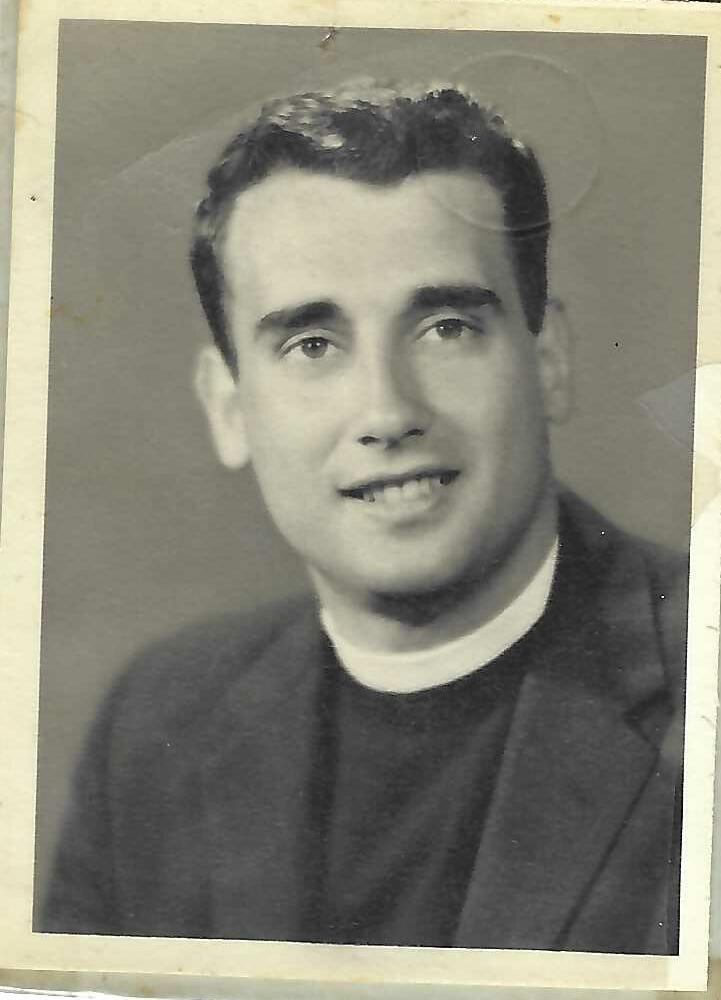
A Life of Ministry
Roger Douglas was an Episcopal priest whose ministry stretched over more than fifty years in parishes in New Jersey, Connecticut, and Arizona. Born in New York City, he studied at Trinity College, Berkeley Divinity School at Yale, and Virginia Theological Seminary, preparing for a lifetime of parish ministry.
Roger cared deeply about helping congregations grow not only in numbers, but in participation, leadership, and spiritual maturity. He loved the weekly rhythm of crafting sermons that connected the Gospel to everyday life, always with an eye toward grace, justice, and hope.
One defining moment in his early ministry was joining the 1965 march in Selma, inspired by the witness of Dr. Martin Luther King Jr. That experience shaped his lifelong commitment to social justice and the Church’s public witness.
Preacher, Teacher, Writer
Roger Douglas had a lifelong love for preaching.
His sermons were thoughtful, pastoral, and deeply grounded in Scripture, often weaving together theology, daily life, and his own gentle sense of humor. He believed the pulpit was a place not just to teach, but to encourage, challenge, and comfort.
Beyond parish ministry, Roger was also a gifted writer. After retiring, he authored five books that explored faith, aging, vocation, and resilience:
- The Pilgrim Season: Finding Yourself in Retirement
- The Sacred Dance: New Possibilities for Later Life
- Letters to Mark: Some Practical Advice As You Begin Your Ministry
- Letting Go: One Golfer’s Journey
- An Audience of One: Sermons for Reflection in Uncertain Times
These books captured his conviction that every season of life holds meaning — and that God continues to call us, shape us, and speak to us no matter our age or circumstances.
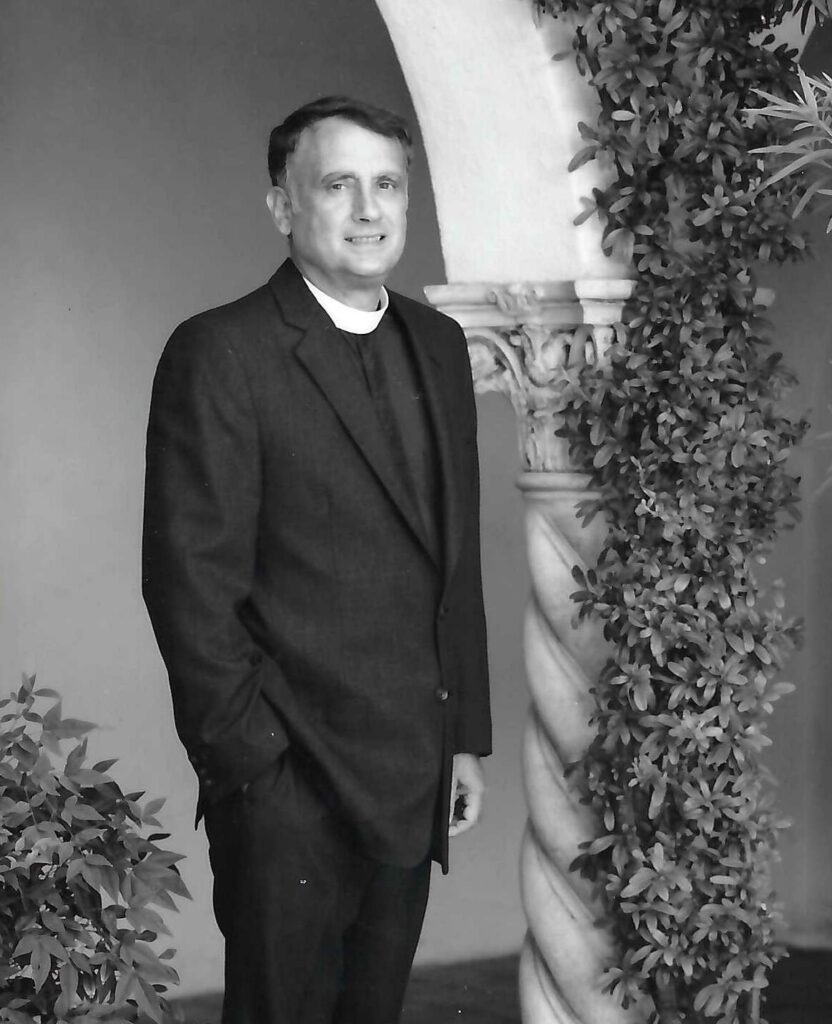
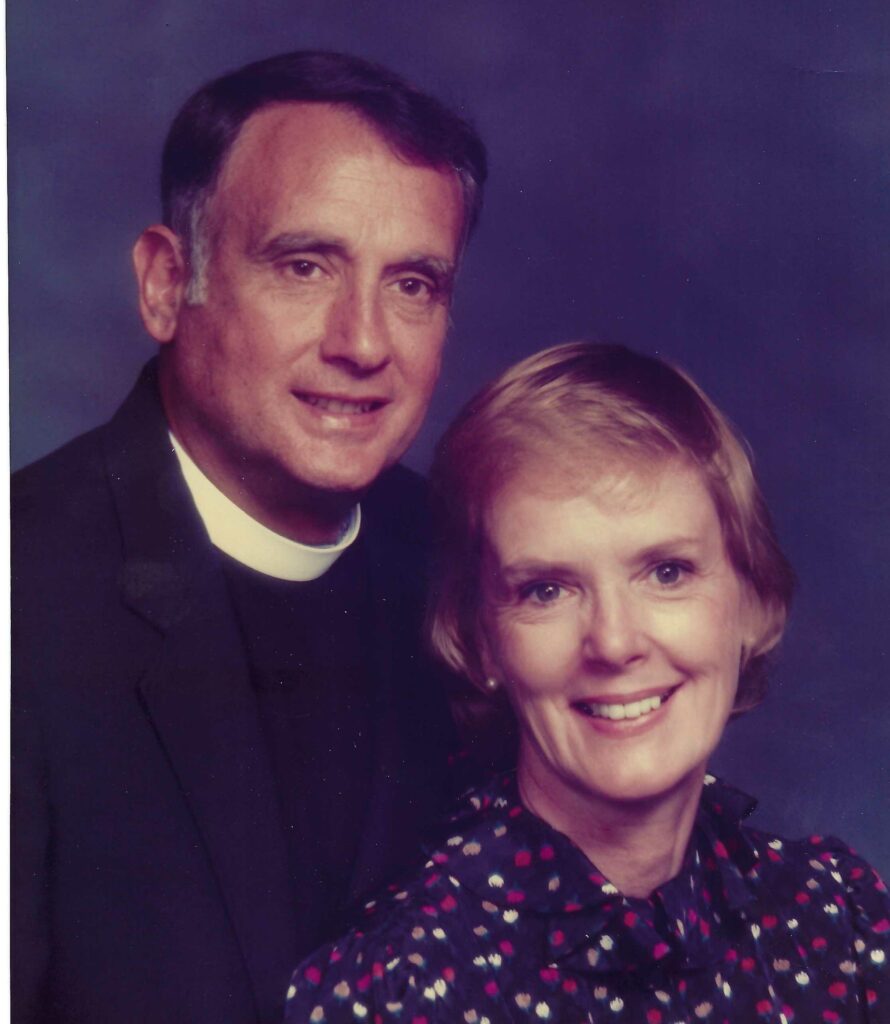
Later Years & Legacy
In his retirement years, Roger continued to serve the Church with joy and humility. He assisted at St. Margaret’s Episcopal Church in Palm Desert, offering pastoral care, preaching, and leadership through a period of transition. His steady presence and deep kindness made him beloved among parishioners, clergy, and friends.
Outside ministry, Roger embraced the gifts of later life. He became an avid golfer, discovering both challenge and delight in the game. He enjoyed bridge, treasured friendships, and relished time with his family. Every conversation with him — whether theological, humorous, or simply human — left people feeling understood and uplifted.
Roger is survived by his wife Peggy; his sister Ellen Kiam; his four children Christopher, Scott, Matthew, and Mary Ellen; eight grandchildren; and two great-grandchildren. He was deeply proud of each of them. His legacy lives on in the countless people he inspired, the sermons he preached, the books he wrote, and the love he gave so generously.
Book Prefaces
These two prefatory essays were originally written for a collection of Roger Douglas’s sermons titled An Audience of One, shown above. They give helpful context for his ministry and for these homilies: one by former U.S. Senator John Danforth and one by Dr. Nelson Reid. They offer an outside perspective on Roger’s preaching, his approach to faith, and the times in which he served. Adapted versions of those prefaces are included here so readers can share in that background.
Preface by Sen. John C. Danforth
Knowing Roger Douglas calls to mind a conversation with a brilliant architect who once accepted a tiny residential project at the end of a career spent designing stadiums and corporate campuses. When asked why he would take on such a small commission, the architect answered that it was important sometimes to “go micro” – to focus on detail and create something both small and excellent.
In recent years, Roger Douglas has “gone micro” in a similar way, turning his energy toward crafting the short homily. For much of his ministry he worked on a large scale: building a neighborhood parish into one of the largest Episcopal churches in the country, expanding its campus, and creating programs in counseling, music, spirituality, and education. He has also written on topics ranging from retirement to golf. Lately, however, his attention has centered on a much smaller space – the chapel of St. Margaret’s Episcopal Church in Palm Desert, California, where he leads a Saturday evening service of Holy Communion.
The chapel is plain, the liturgy simple, and there is nothing flashy about the service. Roger’s sermons are short – six or seven minutes – and his delivery is low-key and unpretentious. He doesn’t lecture; he invites. Like the architect’s small project, his work here is about clarity and refinement. A homily must express a single idea with an economy of words, every sentence carefully weighed. It is harder to write a good short sermon than a long one, and Roger has become a master of that craft.
His preaching is not didactic in the sense of handing down answers from on high. Instead he aims to engage listeners and draw them into an experience. Those who gather in the chapel are not passive recipients of religious information but active participants in a shared act of discipleship. These sermons are part of that invitation.
What follows in this collection is the work of a gifted preacher who encourages you to join him in the life of faith. Just as those who crowd into the chapel at St. Margaret’s are better for their time with Roger Douglas, readers who spend time with these words will come away enriched.
John C. Danforth, U.S. Senator (Retired)
Preface by Dr. Nelson Reid
I first met Roger Douglas not in a church but on a golf course. Anyone who plays golf knows how clearly the game reveals character. It forces you to confront your limitations, the difficulty of the course, the skill of your opponents, and the stubborn role of luck. Golf can make us angry, tempted to cheat on the scorecard or to move a ball when no one is watching. It is a test of both skill and honesty.
Roger came to the game later in life, at an age when many people would rather settle into a rocking chair. He wrestled with golf in the same serious and reflective way that marks his preaching. That struggle led to a book, Letting Go!, which is part confession and part extended meditation. It is a conversation with himself about focus, depth, and the spiritual lessons of a difficult game. The same intensity of reflection runs through the sermons collected here.
Roger offers these sermons against the backdrop of a time when institutional Christianity seems to be in decline. Magnificent churches in Europe stand nearly empty; in America, church attendance is spotty and often confined to older generations. Fewer people identify with historic denominations, and there is no single public voice that speaks for a coherent Christian perspective. In many places theology has given way to vague “spiritual entertainment,” and faith has been reduced to one more consumer choice.
In such a setting, Roger speaks with clarity and calm. He is willing to say that Jesus does not necessarily endorse what passes for the “American brand” of Christianity, or that the church has sometimes distorted the message of Jesus. Yet he grounds these claims carefully in Scripture and in history. He writes and preaches from long pastoral experience, and his sermons show the craft of a seasoned homilist.
These sermons are not offered simply for pleasant reading. They probe deeply into the human search for meaning, security, love, and connection with God. You can hear in them echoes of thinkers like Reinhold Niebuhr, who reminded Christians that “the people of the light” need both the wisdom of the serpent and the harmlessness of the dove. Roger recognizes that tension and invites us to see it in ourselves.
In his view, the most serious “hell” is the one we create for ourselves through pride, greed, and a failure to understand God’s relationship to us and to the world. These sermons are his ongoing conversation with himself, and he invites you into that conversation. Engage them thoughtfully, and you will feel as though you have been part of a serious and consequential dialogue about faith, life, and what it means to follow Christ.
Dr. Nelson Reid