“Believing Without Belonging”
Ephesians 2: 11-22, Matthew 11: 1-6, 16-19
March 6, 1994
Several months ago, the clergy met with our Bishop. At one point, the Bishop said to us he felt there were only three fears in contemporary life: the fear of mutilation, or being cut up; the fear of separation, or being cut off; and the fear of incorporation, or being taken in.
Anyone in a position of leadership knows intimately about the fear of mutilation. It’s what happens when you are slandered, dropped up and down, and torn to pieces for what you have said – or are supposed to have done (whether it’s true or not doesn’t matter). I sometimes wonder how many church families go home on Sunday and have ‘Roast Rector” for lunch!
The second fear – the fear of separation – is what happens when you become alienated, disconnected, cut off from your roots or significant others. Paul spoke about this last week as the principal characteristic of young people.
The third fear – the fear of incorporation – is what I want to concentrate on today. I believe this fear has influenced our religious scene. The fear of incorporation raises for us the specter of manipulation, of being controlled, of somehow losing one’s freedom. It is this fear that has caused so many people to feel they can believe, but they don’t wish to belong.
Our founding fathers were so aware of the pain of incorporation that they wrote safeguards into our Constitution. It was no accident that the First Amendment reads: “Congress shall make no law respecting an establishment of religion or prohibiting the free exercise thereof.” The First Amendment seems to guarantee religious pluralism and, in back of that, it seems to indicate that one of the cherished American Rights is to believe without belonging.
It’s not that we’re not spiritual. It’s not that we’re not religious. We have more religious beliefs today – more sects and insects – in the United States than the rest of the world combined. It’s just that we’re suspicious and don’t really think we need organized religion. Basically, most Americans feel they can believe without belonging.
Well, here we are – into the third week of Lent. Into this journey – this difficult journey of examination, preparation, and discovery. Lent isn’t an easy time. We are told those who fail to wrestle with their faith during these forty days will fail to understand Easter. But it isn’t easy
Lent is like one of those Zen riddles. Just when you think you’ve got the answer, you get a slap across the face. In Lent, the more slaps you get, the closer you are to the heart of things. Lent is a period of unlearning. It is a journey where we examine our faith so that we are not seduced by cheap and shallow answers.
As we move into the shadowland of Lent, let me ask you to examine your sense of belonging to the Body of Christ. Let me pose the question this way: is it really possible to sit quietly on that wind-swept hill – reading your Bible – learning about God – being enlightened, maybe even coming down and performing a good work or two? is it possible to walk in the footsteps of Jesus? is it possible to be a Christian – to be in Christ – without belonging?
I remember back thirty years ago in seminary. The most popular book was an old classic called “The Imitation of Christ.” We studied that book faithfully, for we sincerely believed that if we acted a little more like Jesus imitated him we could bring about the Kingdom. We didn’t need the church to do that, or so we thought. It was only much later that some of us began to realize that we weren’t little Jesuses – that to be in Christ didn’t mean imitation. To be in Christ meant participation – sharing together in Christ’s very life – belonging to the Body.
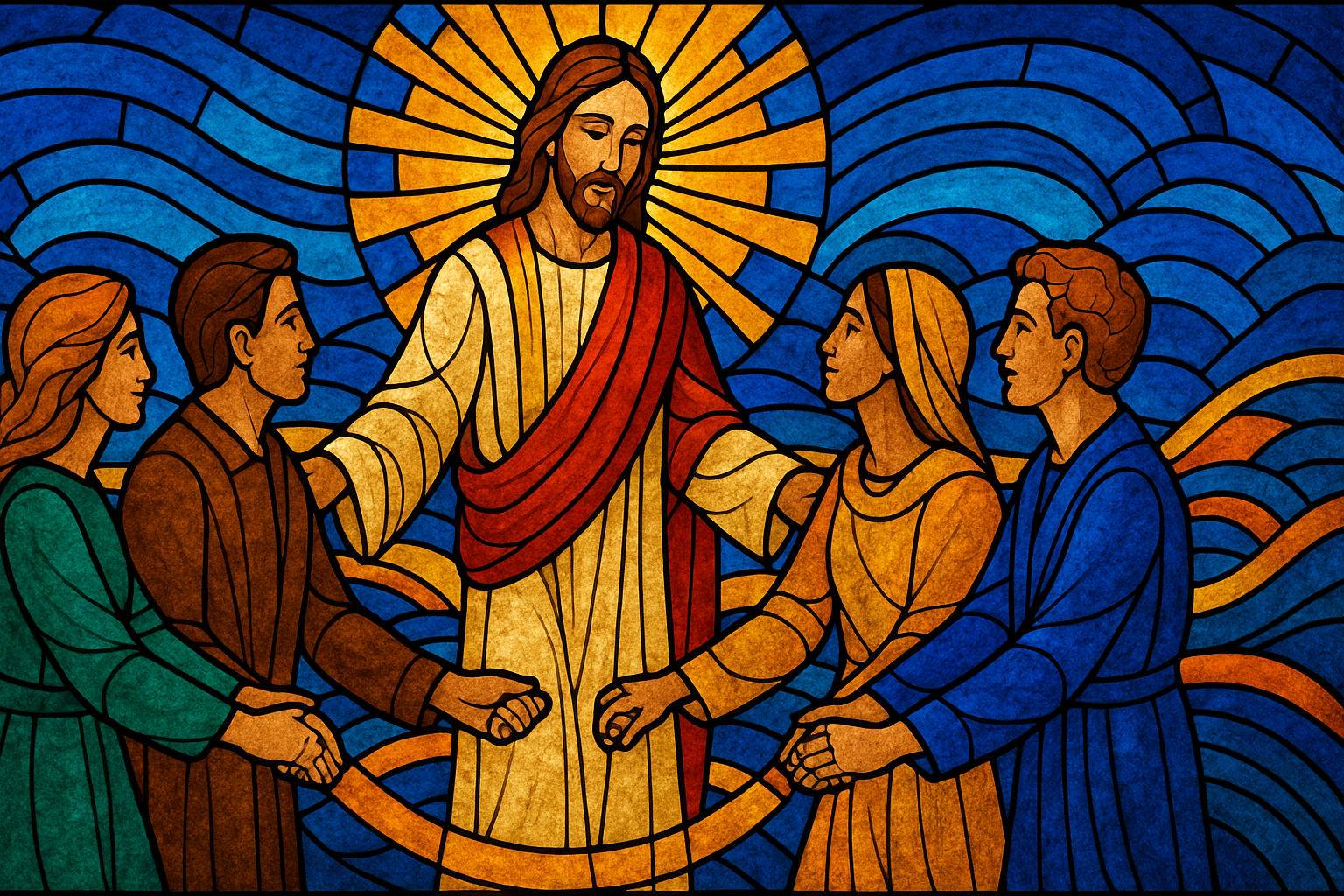
It was a painful learning. We found we couldn’t go it alone. We were slapped back into the place of belonging – of being a part of the whole – of being part of the community of broken, stumbling, pilgrims who journey hand in hand.
It saddens me that there are people for whom the church is a continual disappointment. People ask me: ‘Why doesn’t the church do something about “x, y, or z?” I often respond by saying: ‘Who is the church?” I know they often mean: ‘Why don’t you do something about it?” But this kind of talk makes me nervous. People who talk this way miss the point of Christianity. The heart of our faith is that we are in this together. Participation is more important than right answers or right actions. Participation is what makes possible the Christian-like act.
Last week, Paul invited everyone to join with other faith communities in the PCIC Convocation at the Community Center. I hope you all will come. Not because PCIC is the greatest institution that has come down the pike. Not because you necessarily subscribe to everything they say or do. Frankly, last year I was offended by one of the speakers. But I’m asking you to go because you recognize that belonging and supporting each other is as important as having pure beliefs or being politically count.
Jesus told a parable that bears uncomfortably on t] subject. Some have called it the parable of the playing children and others have named it the parable of the religious people who turned their backs on God. Jesus said: ‘This generation is like children playing in the marketplace. God calls to them and they continue their games.” And, at the end, Jesus delivers these strong lines: ‘We piped to you and you did not dance. We wailed and you did not mourn.”
Good people -a person doesn’t dance alone. A person doesn’t mourn alone. At least we hope they don’t. Jesus exposes the basic problem of the religious people of his day. It’s not that they didn’t believe. It was simply that they didn’t want to belong – not to John’s community – seeking repentance. Nor to Jesus, who sought a new way of loving. Their religion was private, pure, and not able to be shared. But Jesus reminds us that to go it alone is not to be grounded. ‘We piped to you and you did not dance. We wailed and you did not mourn.” What a stinging indictment on those who maintain their beliefs but choose not to belong.
Is there something here for us? I believe there is. As we continue our Lenten journey, can we acknowledge our fear of incorporation? Are we willing to see that knowledge, purity, and rightness are not as important as participation?
Let me confess (it’s good for the soul) that sometimes I feel very stupid in my faith. I don’t know why we do many things. I haven’t a clue why we go through the motions. I’m not sure I really want to be a part of certain causes. But this I do know – we do it together. We are part of a whole. We partake of a larger community. And it is this sense of belonging that enables me to dance and to mourn – and express my faith, even in the midst of my questions.
We end this Lenten meditation with another parable – one that I ask you to think about when you feel the music piped and the wailing heard is not for you. It comes from the pen of Martin Buber, and I offer it not as an easy answer, but rather as a starting point in your own reflection on your journey.
‘If someone should sing and cannot lift up his voice – and another comes and begins to sing – then the first is enabled to join in the song.” That’s the secret of belonging. And the song we sing is about overcoming our fears and being a part of the Body of Christ. AMEN.
“Believing Without Belonging”
“Believing Without Belonging”
March 6, 1994
Scripture: Ephesians 2:11-22, Matthew 11: 1-6, 16-19