“St. Philip’s Day Celebration”
John 14: 6-14
May 1, 1994
I have a confession to make – I am a “computer illiterate.” Each year as summer approaches, I promise myself that I shall turn over a new leaf. Finally, I will buckle down and study all the technologies that go along with being a “computer sophisticate.” This year I even took the first step. I went into a computer store and surveyed their “how-to” books. There was one title that really caught my eye. Here was something written just for me: “DOS for Dummies.”
Possibly a similar title might have been written for our Patron Saint Philip, who, even after the momentous happenings of Easter, still was asking Jesus to “show us the Father.” And we read that Jesus turns to him with a look that says, “How can you ask such a question?” And if he had had a book similar to what I found in the computer store, Jesus might have said: ‘Here, Philip, read this. ‘God for Dummies.’ And after you have read it, we will discuss your questions.”
We who bear Philip’s name find that we ourselves are continually raising those dumb questions. “Show us the Father. What does God look like? Where is God found?
As long as I’m confessing, let me go even further. The older I get, the dumber I feel about God. The God I knew as a young person seems to have taken a sabbatical. The God I trusted implicitly without any questions seems to have gone on vacation. We still have little family squabbles over whether it’s he or she. And we still get passionate over morality. But the real questions – like ‘Where is God found?” And “Does God clean up our messes?” Or ‘Is he/she even concerned?” And “How can we recognize the face of God when we can’t even recognize the faces of our brothers and sisters? Those kinds of questions seem to have escaped us. The older I get, the more I am like Philip, saying: ‘Lord, show us the Father.”
Jesus responds to Philip not by recommending a book “God for Dummies,” but by pointing out that all you need is to look about – see the relationship, understand the friendship.
The words in the Gospel are: ‘He who has seen me has seen the Father.” We know God by our relationship to Jesus. And we know Jesus by our relationship to each other. Aelred of Rievaulx, a medieval mystic, wrote simply: “God is friendship.” In this friendship we have with each other, we see God. The high point of last Sunday’s 9:00 service was Peter’s talk to the young people while he told of a friendship with this fellow from Maine. At the end of his talk, he said: “And my friend traveled to Phoenix this week, but he came this morning to be in church with me.” it was at that moment that I understood more about the words: “God is friendship.” Philip said: “Show us the Father.” And Jesus said: ‘Have you not been with me in this community, amongst these friends?”
Earlier in Jesus’s ministry, the same basic question had been raised. And at that time, Jesus said: ‘When two or three friends are gathered in my name, there I may be found.” We know God by our relationship to Jesus. And we know Jesus by our relationship to each other. We are friends in Jesus’ name.
But our culture is stronger than what we read in the Bible. Our culture is a TV culture that tells us something isn’t real unless we can visualize it – the way we would on the 10:00 news. As Children of our culture, we always want to reduce things to pictures. And here is where we find ourselves skeptical, the way Philip was, saying again and again: “Show us the Father.”
Last October, the Archbishop of Canterbury visited Virginia Seminary. He opened his first lecture on the nature of God by telling an anecdote. I believe it is a challenge for all of us who bear the name of Philip.
“A little girl,” the Archbishop said, “was busy one day poring over her picture book, crayon in hand. Her mother asked her what she was planning to draw. “God,” was the brief reply. Her older brother scoffed and said (as only older brothers can): “Don’t be dumb. No one has ever seen God! No one knows what he looks like.” Licking her pencil with determination, the little girl replied: “They’ll know when I’m finished.”
And isn’t this our challenge? To show people what God looks like by being a community of friends with Jesus? Simple. . . basic. . . – you don’t have to have a degree in theology. You don’t have to be seminary trained. All you have to do is be a friend to Jesus and each other. And so, the older I get, the more I look for friends, rather than insight. The less 1 cease to ask: ‘How can I know God?’ – and the more I ask: ‘How can I trust each of you? How can I find friends?”
For some of you, “friends” is an overworked word. It has become almost synonymous with acquaintance. And so, as we come to the end of our thoughts, I would like to leave you with a different ancient word to think about. The word is “companion.” We who bear Philip’s name are challenged to be companions. A companion in its ancient usage is a friend who shares bread with you.
Philip asked: “Show us the Father.” And today, Jesus would reply: “As you meet, and talk and share bread and drink wine-as companions, with holiness in your eyes-and love on your lips, you no longer need to be shown. For there I am in your midst.” AMEN.
“St. Philip’s Day Celebration”
“St. Philip’s Day Celebration”
May 1, 1994
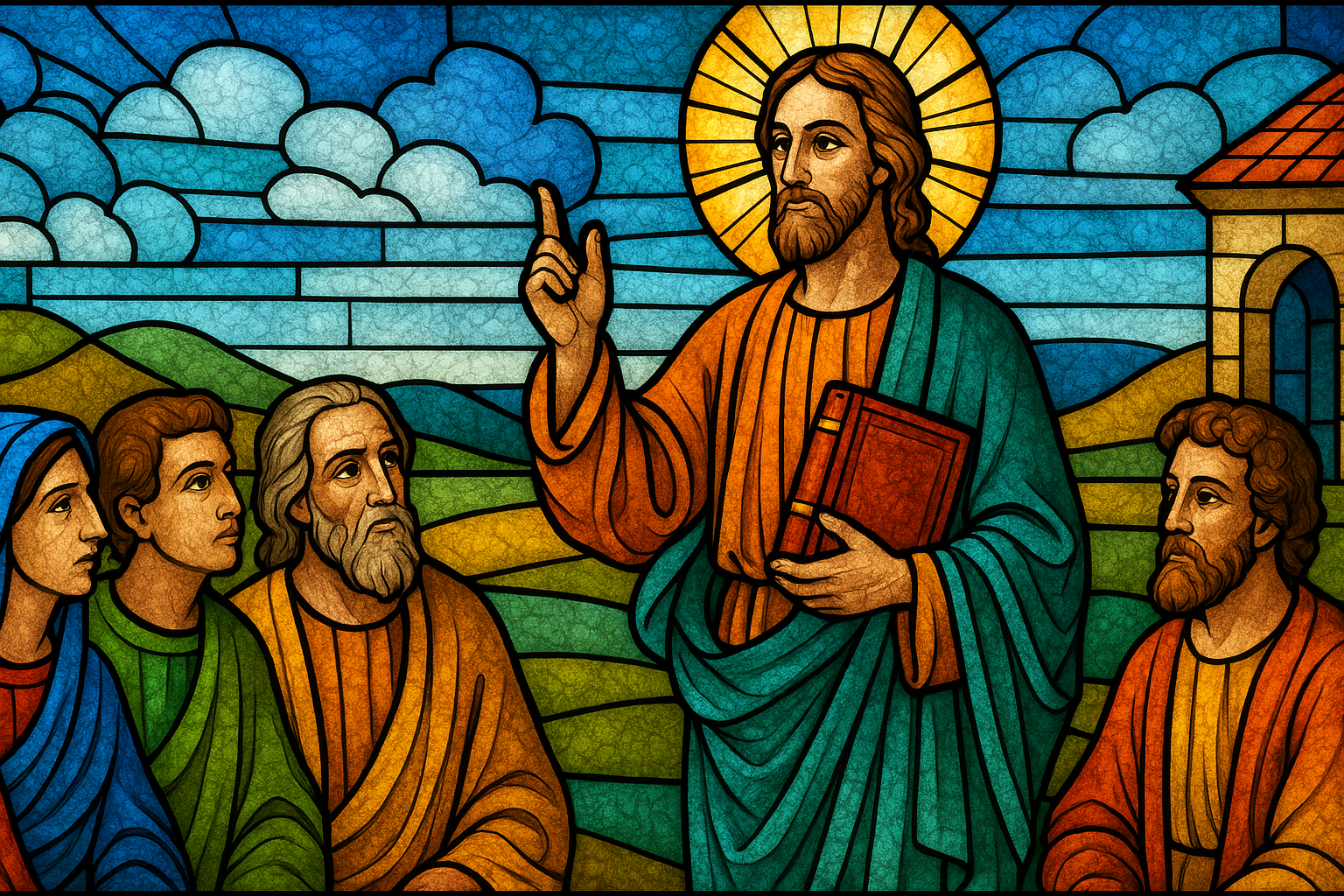
Scripture: John 14:6-14