St. Philip’s Day Sermon
Isaiah 30: 18-21
John 14: 6-14
May 5, 1991
Today is the time we have set aside to celebrate our patronal festival, that special day when we not only remember Saint Philip, but all the members of this community who have made this place holy ground.
I must admit, it’s difficult to preach after this past Wednesday. On that afternoon, many of us came together to give thanks for Harry Sinclair’s life. Harry, as you might know, was a symbol of this place. One of the bearers of the tradition, and so, for me, there feels like a big gap in the long line of people that call this place home. This church, this House of God, this building, this Center for celebration, is a holy house to many people. It has many rooms in it large enough that everyone has a place to stand, a place to be, yet small enough so that everyone is recognized, known and loved. And we all gather in this place like pilgrims, gathered around the campfire, the altar, holding hands and sharing stories and breaking bread together. Some of those stories were shared on Wednesday afternoon. They were about Harry, one of the pilgrims. And today we share some other stories about Philip and other people who have led us, mentored us, pointed us, and walked with us along the way.
I’m glad our community is named after Philip. Philip, of all the disciples, was the one always raising the dumb questions, Where is the father? And, before that, how can we possibly feed 5000 people? You and I wouldn’t possibly be naive enough to ask those questions, period, too embarrassing. Suppose we were to look stupid? Suppose we were the only ones who didn’t know the answer? But Philip, our patron St., is a searcher, and asker of questions period, and so, somehow, that gives us permission on this day to risk raising those dumb questions about life. Questions like, Where is our home? And how do we get there?
Have you ever seen an amnesia victim, a person who has lost his way, not sure of who he is or where his home is? It is painful to watch one of these victims. A lot of us are suffering from amnesia right now. We’ve lost our way and don’t even want to ask this question; our pain is the realization that we are no place, nowhere, no way. Yet this Society of ours wants to avoid pain at all costs. So we run after some easy answers or do things to cover over the pain. And therefore, from an amnesia victim, we quickly become addicts, looking for a quick fix.
Several weeks ago, I read some interesting words by an analyst who specializes in eating disorders. The analyst said, most of us want to feel at home in this world of ours, yet we constantly get lost and then seek out addictive substitutes.
Further, she writes, we want to be rooted in this world, but instead we see permanence by indulging in overeating. We want to be spiritually grounded, but instead we confuse it with booze. Worst of all, she says we long for wholeness, yet we confuse it with addiction in religion and psychiatry. We lose our weight, we lose ourselves, and we lose each other in this addictive society. The analyst concludes, we need to find a way home that is not characterized by addiction.
All I can say is Amen. And that’s our task in this parish church, helping each other to find a way home. We’re pilgrims, nomads, travelers, companions around a campfire telling stories, breaking bread, and helping each other to find a way home.
This place, this parish church, is a place of invitation. Here is where we are invited to follow the one who dared to say. I am the way. In Jesus, the world is turned upside down, greed is replaced by love, self-interest by common interest, power by compassion, loneliness by connections to the one who walks with us.
So what does walking in the way mean for you, you who bear the Saint Philip’s name? What does coming home mean for us in this parish church? Or, as I am always saying to myself when I’m writing a sermon, be specific, Douglas. Stop using religious language and get it into the pews.
I believe it means a new type of connection with the rest of the human race. A connection of suffering and sacrifice, a connection of openness and listening, a connection of compassion and understanding, a way of love.
The early apostles were accused of turning the world upside down to make way for the radical new way of love. They’re isolated in small groups characterized by intimacy and self-disclosure. The apostles told stories, shared life, loved one another, cared for each other, and, through this community, began to move together towards home.
This, too, is what characterizes our community. This is what we’re all about. We’re all in the process of becoming; we’re the big comers who tell stories, share life, and break bread. We are learning to love one another. I think Alcoholics Anonymous has a saying that we might borrow, at least for our groups. We’ve got to learn to walk the walk and talk the talk before we can find our way home.
Not long ago, I heard a social worker address a group. She told of her adopted son. She found him living like an animal in a nearby border town, abandoned by his parents because he had a twisted, deformed leg from birth. She told us how she had adopted that child and how he had several operations. How she had spent thousands of dollars teaching that child to walk like everyone else. In the years that followed, she told how he had grown to be tall, straight, and handsome. At this point, she stopped her narrative and said, My son is an adult now. Where do you think he is? The group responded, in college? In the movies, in politics? In the army? No, she said, he is in Florence prison serving a life sentence for one of the worst crimes you could imagine. You see, she said, I taught him to walk, I just never taught him the way to walk.
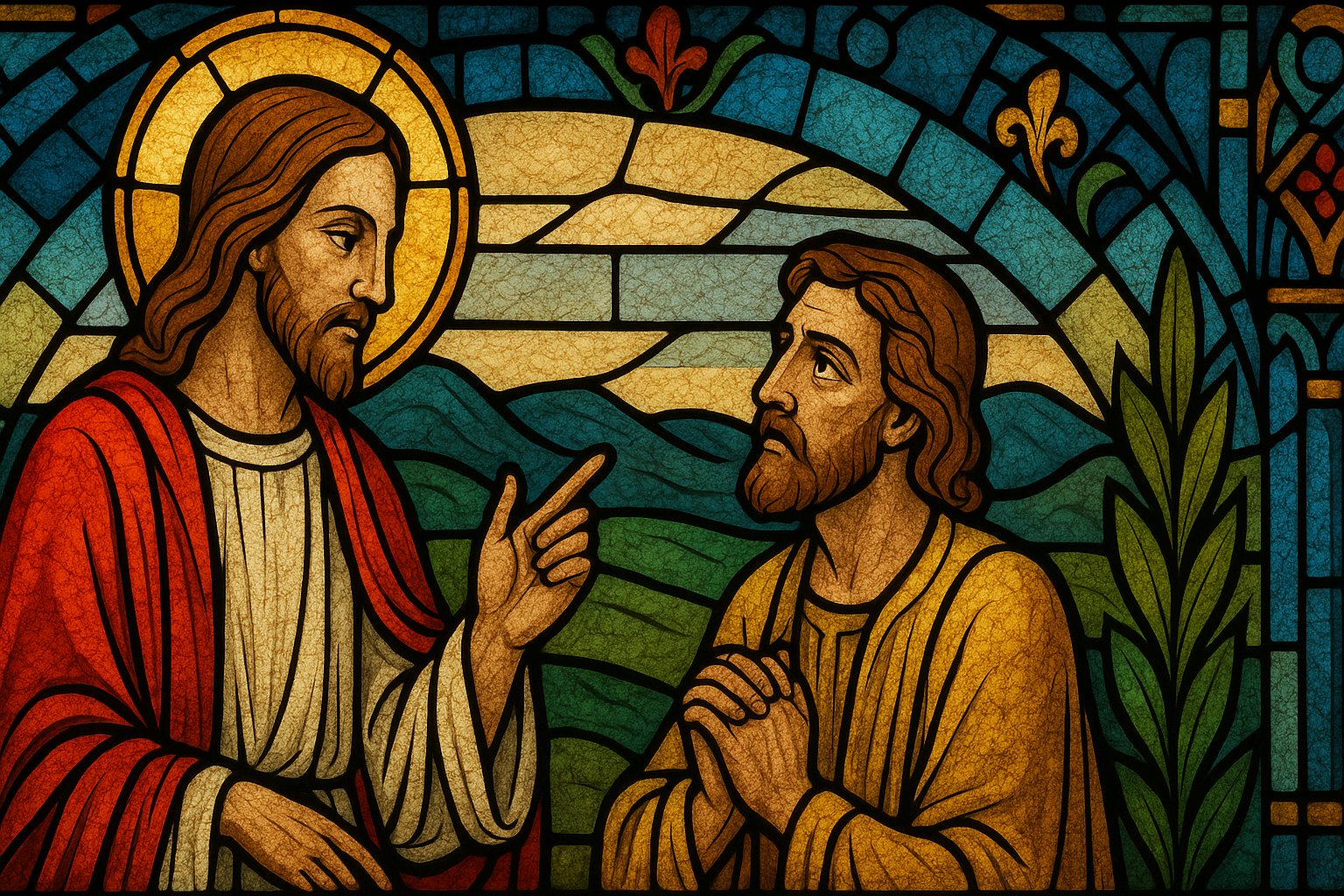
The gospel on this patronal day, shouts out the good news. Jesus is the way. He will show us the path, the way to walk, if we but join hands, he will join us in our walk if we but let him. We are not there yet, but we’re going home. So that’s the purpose of this parish church to be a path on the way home, a doorway to eternity.
We are going home to that banquet where the prodigal son, where the long-suffering mother and the rebellious daughter, were the exile and the stranger, where the man and the woman, the east in the past, the Arab and the Jew, the poor and the rich, the lion and the lamb, the dead and the living all can walk down the road together
this parish church called by the name of Phillip, is the door. Jesus is the way. We are all here, this morning, on the Road home. And I thank God, as I know you do, to be a part of these pilgrims who have found this place, this holy ground, to be the door to going home.
Amen
St. Philip’s Day Sermon
St. Philip’s Day Sermon
May 5, 1991
Scripture: Isaiah 30:18-21, John 14:6-14