Unless One is Born Anew
John 3: 1-16
May 26, 1991
Saul Alinsky, the great model of community organizing, was once quoted as saying, The big question of life is not whether there is life after death. Rather it is, is there life after birth? Is there any newness, freshness, growth, excitement for any of us after we’ve once been born? Or, is life simply a series of birthdays where we mark the passing of time and make note of the aches and pains and continue with business as usual?
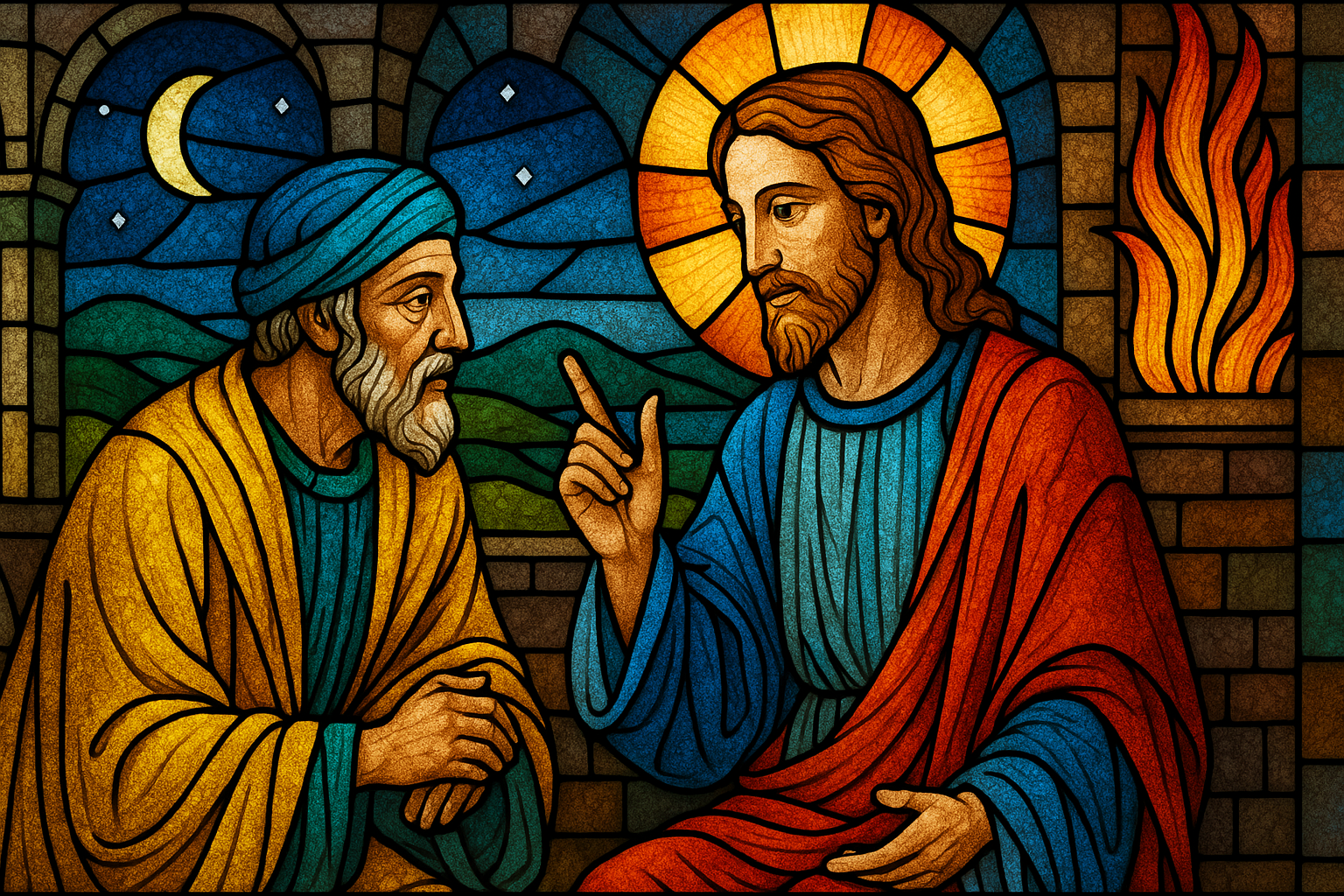
You must be born anew, Jesus says to Nicodemus. The command to be born again is familiar and ever so controversial in American Christianity. Many people go around claiming to have been born again, and I am glad for them, as long as they don’t try to have everyone replicate their experience.
I am reminded of one of the characters in a Walker Percy novel. He was watching the eager, sensitive, evangelistic Christians, and finally he said, If the born-again Christians are twice born, I’m going to wait for the third go around.
Despite the difficulties and controversies with the born-again segment of Christianity, the call for rebirth is a true call, or as the Catholics are so fond of saying, abuse or misuse does not negate right use.
Rebirth is a powerful image and lies at the heart of the Christian faith. A great theologian once said, Jesus did not teach religion. He taught rebirth. Unless one is born new, one cannot see the Kingdom of God.
The other day I found myself staring into a mirror. And gazing back was the face of a stranger. There was someone in his late 50s approaching a birthday, but thinking, So what? Here was the face that hadn’t changed much in the last five years, ohh maybe a wrinkle or two, a few more Gray hairs. Life had settled down. There were much fewer mountains to climb, maidens to rescue, fires to put out. The challenges that loomed ahead were fewer, the pains of change were in the background, and yet, this text has been ringing in my ear all week, unless one is born anew.
Just imagine what it would be like to be born again. Imagine reliving your own birth; what a crisis that would be. Imagine the trauma of birth, imagine yourself going through the intense physical pain, the enormous pressure, the terrible wrenching separation from a place of safety, the shattering encounter with the world. Can you imagine it? When I tried to let my mind go and imagine such an experience, I usually end up saying, Thank you, but no, I would rather pass. It is so much easier to sit back and enjoy one’s age. But the invitation is out, the cat has been let out of the bag. No longer can we ignore the summons unless one is born anew.
Being born again is a movement from a safe place where we’ve been at one with our environment, to a fearful place where we are no longer protected.
Being born again is traumatic for one is suddenly aware, painfully aware, of one’s aloneness, one’s helplessness, one’s dependence on God. Being born again is like becoming clean, wiping off the birth coverings we have accumulated, and emerging as a child of God.
Many of you are familiar with CS Lewis’s The Narnia Chronicles. In one of the books, there is a boy, Eustace by name. He’s a very unpleasant little fellow who has very greedy, selfish thoughts, and over time, he has turned into a dragon with thick, gnarled, knobby skin.
There is a deep spiritual truth here. We become what we love. We can become transfigured by greed, callousness, self-love. Lewis, in this fantasy, has Eustace slowly turned into a dragon.
You’ve heard it said that we begin to look like our pets, owning a Labrador, or does he own us? I sometimes question that assumption, but it’s true. We begin to look something like our animals and so, do we look like those qualities and values we hold dear.
But at one point in this story, Eustace undergoes one of those spiritual experiences is one of those aha times. He realizes what he has become, and once he is able to do this, he understands he has to shed those skills he has accumulated through selfishness. Used this comes to realize a realization that all of us at some time or other will have to comprehend. In order to meet God, to have a relationship with God, we must be willing to stand naked, without any protective covering, without metals or honors, or wealth, or good or bad deeds, without any of the goodies with which we’ve surrounded ourselves, which have become a second skin to Americans. Eustace realized he must stand naked before God.
At first, he is able to shed a couple of those skins by himself. But there is still one thick blistered skin left, and no matter what he does, he doesn’t seem to be able to get it off. Finally, the lion, which is the Christ figure for CS Lewis, comes over and says, You will have to let me undress you.
Here, too, Louis makes a very important theological point: we can’t do it on our own. I know this is heresy for American Christians. Somehow, we feel we can storm the gates of heaven by our own energies, holiness, spirituality, what Louis is saying we have to learn to let go, to turn over the undressing to God.
I was afraid, said Eustace, afraid of his claws. The first tear he made was so deep that I thought it was going right into my heart. And when he began pulling the skin off, it hurt worse than anything I’ve ever felt. The thing that made me able to bear it was just the pleasure of feeling this stuff peeled off, then the line caught hold of me and threw me into the water, and it smarted like anything, but only for a moment. After that, it became perfectly delicious, and soon I found that all the pain was gone, and I saw why. I had turned into a boy again.
This is what being reborn does. It burns us, it cleanses us, it transforms us. It burns away the accumulation of prejudice, falsehood, mean-spiritedness, fear, anxiety, and it makes us naked again before God. It transforms our aged cynicism, our timid sophistication, are guarded comments, and says, see yourselves as young again, live in the world as a child of God with hope and anticipation and excitement. See yourselves in a new light.
A literary critic once wrote, A new world begins when we see ourselves in a new light. And so it is in being reborn. We need not see ourselves in the old light. The world about us takes on a new shape, a new meeting. Suddenly, it is all for us in God’s presence. We always made new, the crooked is made straight, the brokenness is made whole. It’s a fantastic promise, the promise of being born again.
Nicodemus was born again. That’s the good news. If an old man can be born again so can I. So can you. We can say yes, shed some skin, start over, become childlike.
We cannot do it on our own; we need Christ’s help. But like the lion in CS Lewis’s story, he stands before us saying, You will have to let me undress you, tear away the old skin you have accumulated. The good news is that we can be reborn. The bad news is that many of us will not take the risk. Will you join Nicodemus today, by simply saying to yourself as you come forward, let it happen, Lord, let it happen to me.
Amen
Unless One is Born Anew
Unless One is Born Anew
May 26, 1991
Scripture: John 3:1-16