Impressions from the Convention
1 Corinthians 13: 1-13
Matthew 25: 21-43
July 21, 1991
Sometimes a preacher preaches because he has something to say. Other times, a preacher preaches because it’s Sunday and he has to say something. I hope this is one of the former times, for I want to share with you some impressions, feelings, and understandings of the past week in Phoenix. A week that was made remarkable for me and helped me to better understand the nature of the Episcopal Church. But first, let me start with the story. A story told several years ago at an annual parish meeting by the Bishop. Some of you may remember. We were going through controversial times and I invited the Bishop in the midst of our conflict to come and be our keynote speaker. He started out with this story: once there was a synagogue. It was a very well-known place of worship. Its liturgy and music were of the finest, except for one thing period every time they said the hero Israel, which is the high point of the Jewish liturgy, they ended up in controversy. It seems that half of the congregation stood for this recital and half remained seated. If this were not bad enough, there was always a grumbling, the ones who were standing rumbling, get up get up, the ones seated saying sit down, sit down!
Eventually, there was open warfare period not only were the standees not speaking to the sit-downers, but the sit-downers were also talking of pulling out and going to another my God. The incumbent rabbi was at his wits end, and then he had an idea.
He would send for the original, founding rabbi, bringing everybody together in a big meeting, have each side describe what they did during the saying, and then ask him to decide what the tradition was. Fortunately, the original rabbi was still alive, living in retirement in a distant city. On the day of the big meeting, the get-uppers spoke of Selena with the eloquence of the prophets, using scriptural quotes and arguments from history, they ended up with the ringing words, any real Jew of course, would stand! And then the sit-downers began to explain the shape of modern liturgy, how we must capture the younger Jews, and how we show we are made in God’s image by remaining seated, there was much clapping as each person made his or her telling argument. Finally everyone turned to the old rabbi and said, tell us, ohh venerable one what is the real tradition of this synagogue? The old rabbi paused to for a moment and with a twinkle in his eye, said, this is the tradition. Some stand, some sit, and everyone fights.
Some stand, some sit, and everyone fights. That’s what I experienced in phoenix and somehow in all that confusion, I found a special vision of Anglicanism and the Episcopal Church.
As many of you know, I went to Phoenix to our National Convention, with certain skepticism and reluctance. I knew there were going to be a lot of people with passionate views about sex, abortion, inclusive language, ordination of homosexuals, race, and the environment. Somehow in mid-July, I was not looking forward to being amongst a lot of controversy.
To be even more honest with you, I was fearful that we would stumble into some premature solutions to some very difficult problems by succumbing to the alluring challenge that the world, or at least the Episcopal Church, was waiting for some word on those thorny issues. I saw the huge House of deputies, and that smaller House of bishops, as unwieldy and somewhat unlearned, you probably felt that legislation was going to answer these pressing problems of the world. The experience with legislation in the church is that although it is supposed to lead us to a deeper relationship with God, it usually turns out instead to be a stumbling block.
I was also fearful of the fights we were going to have over scripture. For me, scripture, those love letters from God, are the first words on a subject and should lead us into a deeper relationship with each other, and with the Almighty. I was fearful that people would make scripture the last word and try to use it to circumscribe God.
I’m happy to report to you that although there were heated discussions and many strong arguments put forth, we were able to come out with a reason, an Anglican approach. We were able to demonstrate to the world that we could be broad enough to seize the middle ground, and inclusive enough to include all sorts and conditions.
Abba Elon, the distinguished Israeli statesman of a number of years ago, once voiced these words, people and nations, and I would add even churches, do act wisely after they have exhausted all other possible alternatives. And I believe we did act wisely in what little legislation we did.
Somehow the Episcopal Church, as far back as Richard Hooker, or the Elizabethan settlement, has always said, you are a large enough family to include people of differing ideas, and the important thing is not a standard of orthodoxy but a common ground, a common worship, a community together with common prayers.
In the House of bishops, as they debated the sexual resolutions, it became clearer and clearer that our knowledge was initiated, that our need to be pastoral already overshadowed our need for binding legislation, and that in the last analysis, as one Bishop said, Anglicanism tends to be messy and even confusing and takes a lot of time, but at least we don’t posture to have the whole truth or the last word of orthodoxy. Saint Paul in our epistle said We see in a mirror darkly. Yes, there is divine truth, but we discern it as fallible human beings. Only God can say, This is the truth, this is the way. We human beings stumble around with dark, yet in the last analysis, it’s the loving response that lasts. It’s the loving response that is closest to God’s way. To paraphrase our epistle, slightly, there is orthodoxy, there are standards, but only love lasts forever.
I attended a dinner where Robert Bella spoke. He is one of the great historians and sociologists of our day. Doctor Bella made a ringing plea that the Episcopal Church hold to the centrist position. We are beset with extremes on both sides, he said, both sides talk of losing members. Bella asked, Why are we so concerned with losing a handful of people when there are thousands of babies dying every day, millions of homeless and poor? What we have to learn is to care and love, for ultimately, that’s God’s real concern.
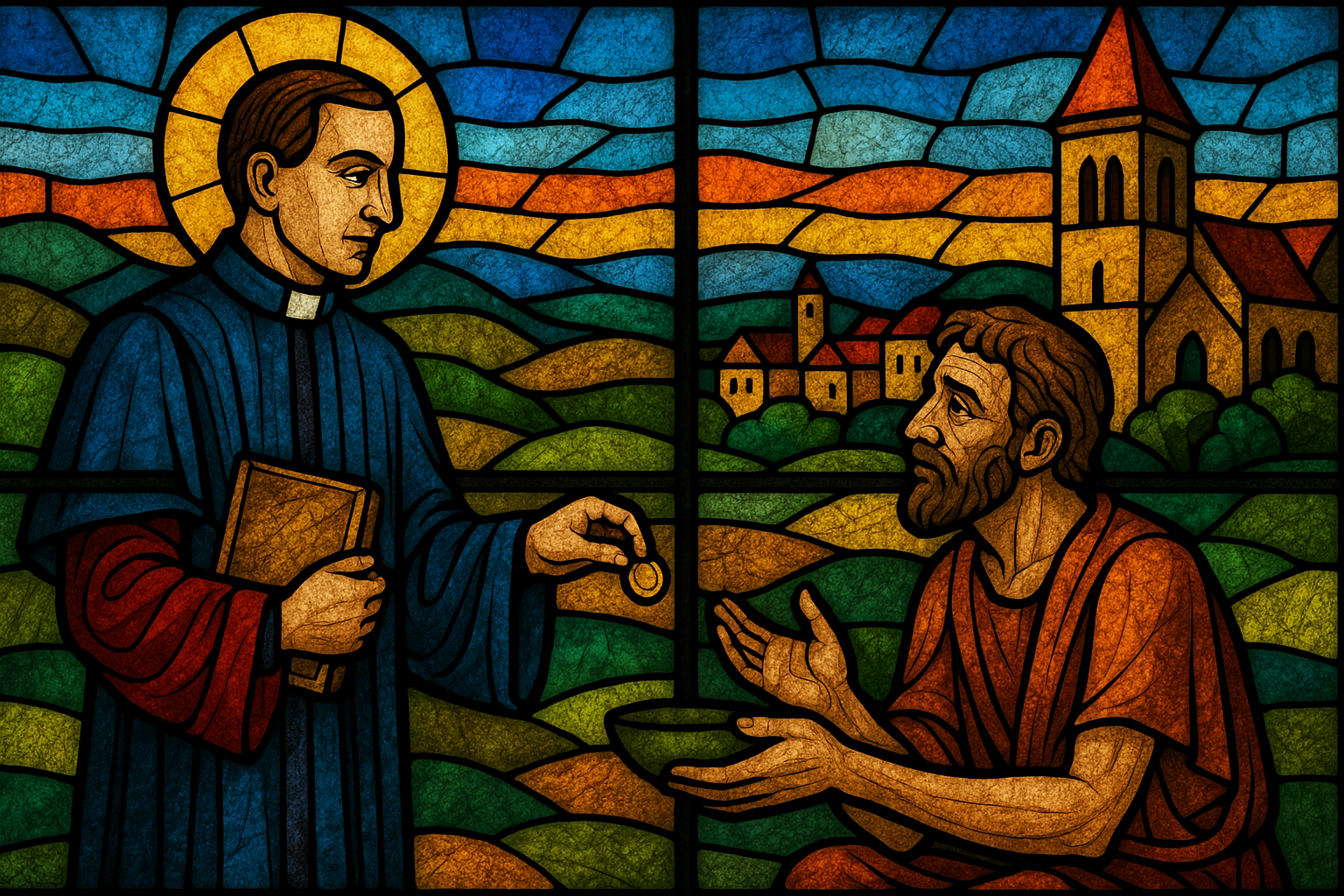
In our gospel, there is an interesting point made. At the last judgment, when the sheep and the goats are separated, there is nothing said about purity of theology, about rightness of belief, about standards of ethics. It only speaks of caring. And the people are amazed, for the blessing those who gave food to the hungry and drink to the thirsty, welcomed the strangers, clothe the naked, visited the sick, and went to the prisoners. It’s only caring and love that counts, and I’m convinced that the only kind of church that represents God is one of caring.
Is the Episcopal Church such a church? It is not for me to say but I confess to you this past week I felt the spirit, moving in this old Church of ours. For I felt the primacy of love where we could disagree but do it agreeably, where we could have mutual respect even though we didn’t have mutual theologies. Where we could allow diversity to flourish and still seek a common ground, as members of a thinking, reasoning, somewhat messy family of God.
I haven’t seen what the media have written about the convention. I’m afraid they’re hasn’t been much. There were no winners in the long debates and the many resolutions set forth. But that’s the nature of our family, and for me, I learned to appreciate over and over again how magnificent A privilege it is to be in this Church of ours.
In one of his novels, Peter DeVries as one of his characters offering up a prayer. I would like to repeat it, and ask you to take it to heart as a prayer for those of us in the tradition of Anglicanism as I experienced it this past week.
Let us pray
Oh God, give us courage for our fears.
The wisdom to survive our follies and charity to bind up the wounds we inflict on one another. through Jesus Christ our Lord. Amen
Impressions from the Convention
Impressions from the Convention
July 21, 1991
Scripture: I Corinthians 13: 1-3, Matthew 25:21-43