The Addictive Power of Money
Matthew 6: 19-21, 24-33
October 20, 1996
I want to talk to you this morning about an addiction. This addiction is fairly common. The more we have of the addictive substance, the more we want it. The reason (if we’re to be perfectly honest) is that we like what it does for us. It’s pleasurable. We often say to ourselves: “It’s better to have this addiction than not to have it.”
This addiction starts, for many, when we’re quite young. At an early age, it begins to shape our lives. Our society condones and even encourages us to be an addict. And soon we find ourselves measuring our self-worth by how much of the addictive substance we use and accumulate.
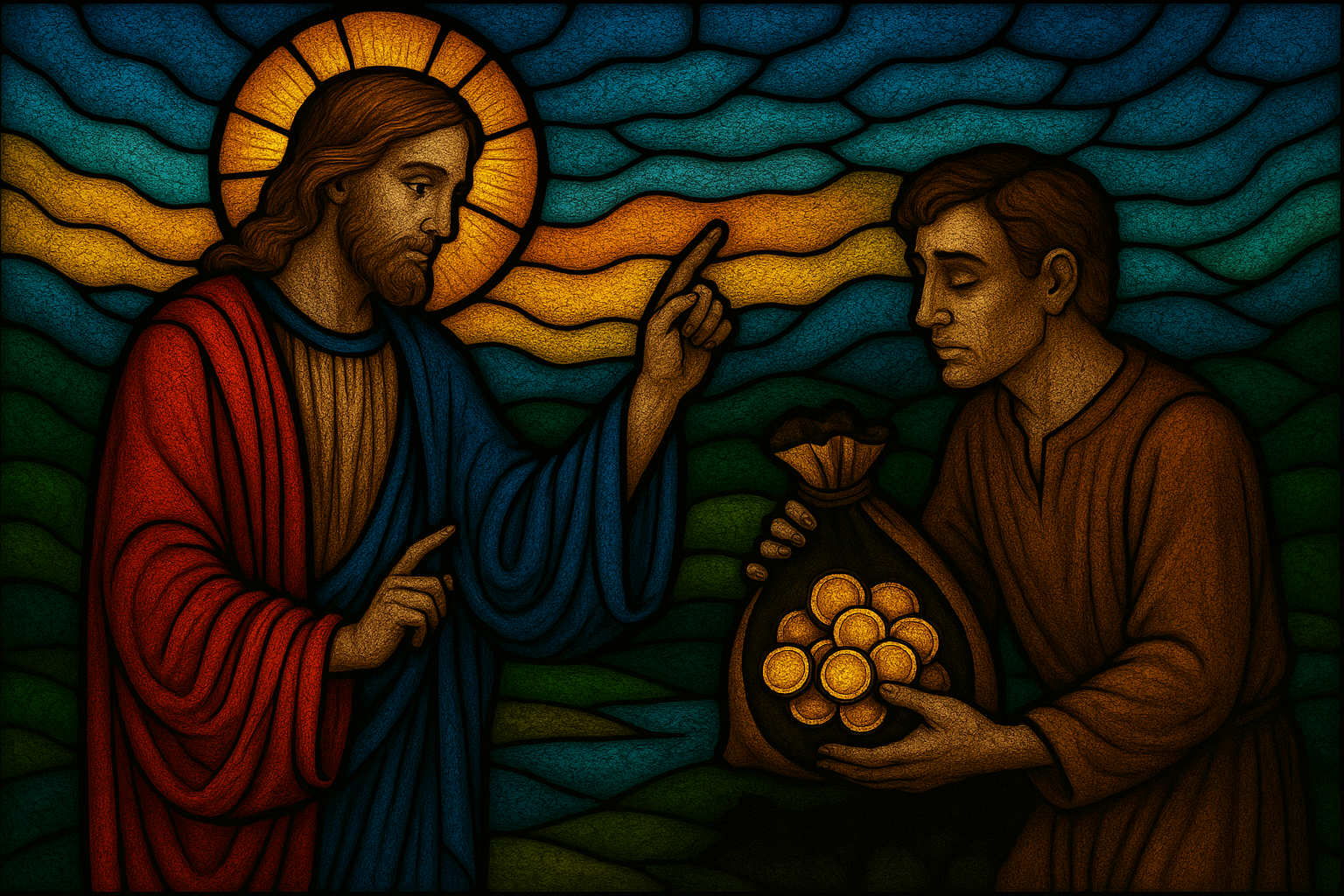
After awhile, we become completely hooked. We need more and more to satisfy our craving. We also begin to plan our lives around our addiction. It often becomes so important, so much a part of our life, that we sacrifice family and friends to feed our addiction. Cigarettes, alcohol, drugs are all pikers compared to this addiction. The amazing thing is that Jesus understood this. Almost 2000 years ago/ Jesus spent a great deal of his time teaching and warning us of the destructive nature of this addiction. Listen to his words from our Gospel this morning. “You cannot serve God and Mammon.”
Jesus deliberately chose to use an Old Testament term for money. He called it “Mammon.” In those days, people were more realistic about the addictive power of money. Money was taken seriously. It was recognized as a demon, or another God, depending on your theology. And once you were hooked, people understood that it was impossible to have any other loyalties. That is the nature of an addiction. Mammon took over your life and ate away at your soul
I noticed recently a fascinating article in The Wall Street Journal. A financial manager made this statement. “Money,” he was quoted as saying, “is more important than friends. Friends will let you down.” That man believes in the temporary nature of friendships. “Friends will let you down.” Only a god, something indestructible, someone you can count on, he says, deserves our loyalty, our devotion, our trust, our addiction. Mammon, you are present today as well as in the Old Testament days.
Of course, we’re much too sophisticated to call money Mammon. We don’t usually give names to the dark forces that inhabit our lives. The truth is that we’ve become experts. Money, we tell ourselves, is a neutral thing. Old sayings, like “Money is the root of all evil,” we laugh at and say, “That’s a product of Victorian thinking. Something only preachers might warn us about.” But is it? I sometimes wonder what would happen if the Surgeon General printed warnings on all our money like: “This bill can be injurious to your health,” or “Watch out. This can be addictive. You may end up relating to this substance closer than you do to friends and family. Closer than to your God.”, . or “You may be losing your very soul by holding on so tightly to this bill.”
I want to suggest a parable for us to think about this morning. I believe if we listen closely to it we will gain an insight into our addictions and the problems that can arise. The story is a fable told to children, but it’s anything but childlike.
Once upon a time, the fable goes, there was a beautiful nightingale. This nightingale used to soar through the night, singing its song of love throughout the countryside. One day, a peddler appeared who was selling worms.
Just one feather from its wing was all the peddler asked in exchange for a worm. It was a painless kind of transaction. After all, one feather didn’t seem like such a big deal. Of course, the plot is fairly routine, and you can easily predict the crisis. After a while, the nightingale becomes hooked on worms. And the more she got, the more she wanted. Eventually, we find that she had traded so many feathers that she could no longer fly. And then the fable gives a twist to the old story – which makes it a scary parable of life.
One day, as the peddler made his rounds, he found the nightingale standing by the road. She had become aware of her addiction to the worms and wanted to reverse the trend. And so she worked through the night and had assembled a bunch of worms to trade back for her wings. But the peddler only laughed. “What do you think I’m in this for?” he said. “My business is worms for feathers, not feathers for worms. You’ll just have to learn to live with the fact that you can no longer fly because of your addiction.”
That’s Mammon’s game. Its business is to blind you to your addiction until it is too late. To make you think this is the most important part of your life and neglect other parts. To help you deny your addiction until you can no longer fly. The fable reminds us to watch out. You may find that the trade cannot be reversed.
Jesus said it clearly. “You can’t serve God and Mammon.” Did he want us to give away all our money? Go on welfare? I think not. Jesus spent time, accepted gifts, and went to parties with the wealthy as well as the poor. It was not money that concerned him; rather, it was the addictive quality of money. He warned us that money had power and could get between you and God. The issue he alludes to in many parables was not about how much money you had or did not have; the question he raises with us is about your relationship to your money. Does your money allow you to fly? Or does it simply allow you to buy more worms?
Gordon Cosby, one of my heroes, who is the pastor of the Church of the Savior, in Washington D.C., made these statements, which might be helpful for us to ponder in the weeks ahead. First, he said, “To give money away is to win a victory over the dark powers that oppress us.” And second, he said, “What would happen if we were to judge persons’ self-worth not on what they have but on how much they have been able to give away?” Could this be the beginning of breaking the power of money?
This sermon isn’t really about the Every Member Canvass. I’m even going to commit the unforgivable sin and tell you that whatever you pledge will be just fine. The Vestry will form the budget on whatever you give. The issue really is your relationship to your money, not to a church budget.
I often meet a person who thinks I’m after their money. What I’m really after is their soul. Whomever has ears to hear… let them hear.
Amen
The Addictive Power of Money
The Addictive Power of Money
October 20, 1996
Scripture: Matthew 6: 19-21, 24-33