A Word to My Fellow Listmakers
Acts 6: 8-15, 7: 51-58
February 6, 2000
One of my favorite lyrics comes from Gilbert and Sullivan’s The Mikado. It’s when the Lord High Executioner sings, “I’ve got a little list. I’ve got a little list – who never would be missed. Who would never be missed.”
Well, what about yourselves? Do you have a list? A list of people you carry around in your head? A list that you water, cultivate, and think about, if not sing about? Do you sometimes wake in the middle of the night and dream of strategies to do away with these people? Do you sometimes write letters telling them off, but wisely never mail these denunciations? Do you constantly think of ways to get back at them?
This past Tuesday, I added a couple of county supervisors to my list. In our time with the county officials, I think a few supervisors and administrators climbed quite high on my list. But that’s my list. This morning, I want you to think about your list.
Maybe your list contains people who have occupied a prominent spot for years, family members whom you have ignored for years, friends or neighbors who said or did something out of line a long time ago, or someone that you work with or used to work with, and you’re not ready to forget. Oh yes, we all have little lists. And if only we could be the Lord High Executioner, we’re pretty sure they “would not be missed.”
I don’t know about you, but my list tends to get very long. And whenever I meet people on my list, I let them know, in no uncertain terms, that they are on my list.
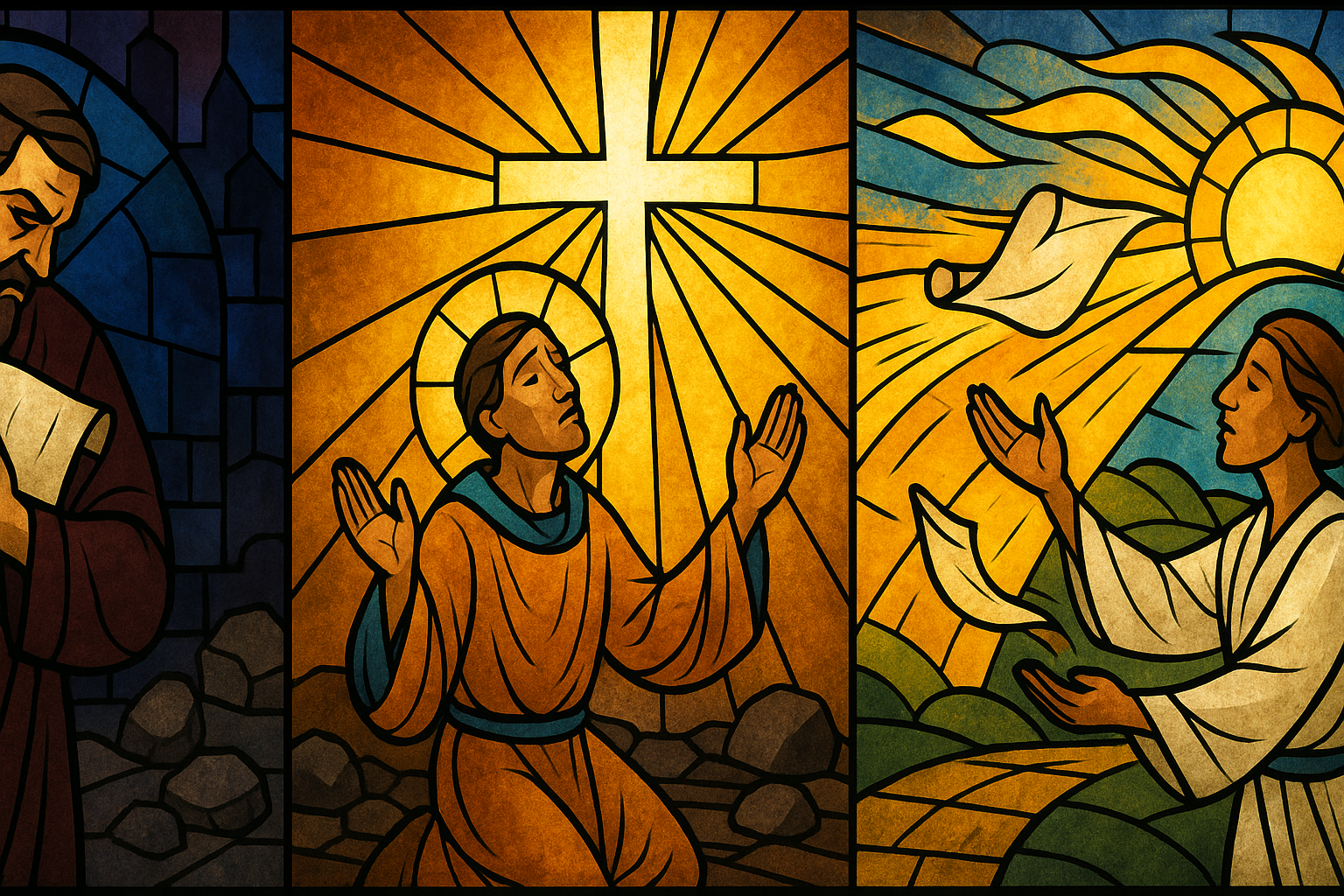
I can identify with Stephen, the first deacon, from our lesson in the Book of Acts. He was in the midst of a dispute with the church people of Jerusalem, and they began to use some dirty tactics. They spread rumors.
– “We have heard him speak,” they said, “blasphemous words against Moses and God.” Sort of reminds you of the campaign in New Hampshire. And Stephen, a little later, after arguing with them and not getting a favorable hearing, lets his anger boil over. He delivers his own blast. “You stiff-necked people, uncircumcised in heart and ears,” he says. “You always resist the Holy Spirit. As your fathers did, so do you.” Stephen not only says these people are intransigent, intractable, unhearing types, but that they come from a family of SOBs. And guess what? His opponents take up rocks and stone him to death, and he becomes the first Christian martyr.
I would contend that Stephen’s martyrdom is clearly connected to his inability to keep focus during his dispute. Stephen lost his sense of perspective in the argument. He descended to the level of his opponents. If they’re going to use dirty tactics, he will counter with his own. If they’re going to demonize him, he’s going to not only say how bad they are, but also he will bring in their whole family. “You’re not only wrong,” he says, “but your fathers were terrible also.”
We don’t know exactly what triggered this response in Stephen, but we can see it was like a cancer. The anger invaded his whole system. It spread beyond its rightful place. And when it moves in and takes over, it can kill. Sometimes it kills your opponent; sometimes you end up being killed yourself. Anger like this doesn’t always physically kill, but it certainly got Stephen stoned. Anger doesn’t always kill people, but it often kills ideals, generosity, compassion, and love. This is why Jesus warns us against anger. Anger unchecked, nursed, held on to, Jesus tells us, can be as serious as murder in God’s eyes, a fact that Stephen found out when the rocks began to be hurled.
Now I’ve said it before, and I’ll say it again – there is nothing wrong with anger when facing injustice. A tea bag that I once saw had a little aphorism on it. It said, “It’s better to boil than simmer.” Anger is often appropriate. The issue isn’t really anger; it’s how you handle it. Do you hold on to it? Do you give it free reign? Do you have to respond in kind to the other person’s salvos? The problem with anger unchecked is that it reduces you to the other person’s level. If they have a list, you must have a list. If they are going to call you names, you then may call them names. And so it goes, until you both end up throwing rocks at each other.
Jesus introduced another possibility into the downward spiral. He said that with God’s help, we can forgive and stop the spiral. Now, forgiveness doesn’t mean forgetting, but it does mean letting go of your anger list
It means not letting your anger, righteous or otherwise, become central in your life. It’s interesting to note that the Aramaic translation for forgiveness is the English word “release.” We are reminded by Jesus to release our grip on hatred and rage. Stop your list-making. And this is good Christianity as well as good psychology
A former inmate of a Nazi concentration camp visited a friend who had gone through the ordeal with him and asked, “Have you forgiven the Nazis?” “Yes,” his friend said. “Well, I haven’t. I’m still consumed with hatred for them.” “In that case,” his friend gently said, “they still have you In prIson.
Many of us remain in prison because we lack the capacity to release our anger, to get rid of our hatred lists, to truly forgive.
Someone once asked me how I got my ideas for sermons and how I knew what they were thinking. I told him, the truth was that most of my sermons were directed at myself. They really are a dialogue within my own life. And this one today is no different.
As most of you know, we are having an argument with the county-
And the Word of God that seems to come to me is that if we get drawn into lowering our standards, if we allow ourselves to be drawn into a dog fight, the only one who wins is the dog. Yes, I have to remind myself it’s conceivable we might lose the fight. But if we set aside our faith when it becomes inconvenient, if we let our anger spread to our actions, we can lose something far more important than the disputed land.
Good people, if it were easy to be a Christian, we would not have to come here every week to work on it. Being a Christian in a hostile, uncaring, irreligious culture is not easy. (As Soren Kierkegaard wrote many years ago, “It’s not that Christianity is so hard to believe. That’s not why so many people have rejected it. It’s just hard to follow.”)
Yes, we have some disagreements with the County Board of Supervisors, but if we let our disagreements keep us from following Jesus Christ, then we have nothing. As followers of Christ, remember, we follow the one who said, “The first shall be last, and the last shall be first.” And later he told us that he has come to call sinners, not the good people. And he reminds us church people that when we get to Heaven, we might find some super bad guys, some people on our lists. (My wife told me not to mention names.) And we might even find one of those supervisors saying, “I may not have been much of an Episcopalian, but I’m part of God’s family.” And God willing, we would rejoice that he made it ahead of us.
Amen
A Word to My Fellow Listmakers
A Word to My Fellow Listmakers
February 6, 2000
Scripture: Acts 6: 8-15, 7: 51-58