Can Human Nature Change?
Genesis 27: 1–4, 18-36a
John 3: 1.-8
September 21, 1998
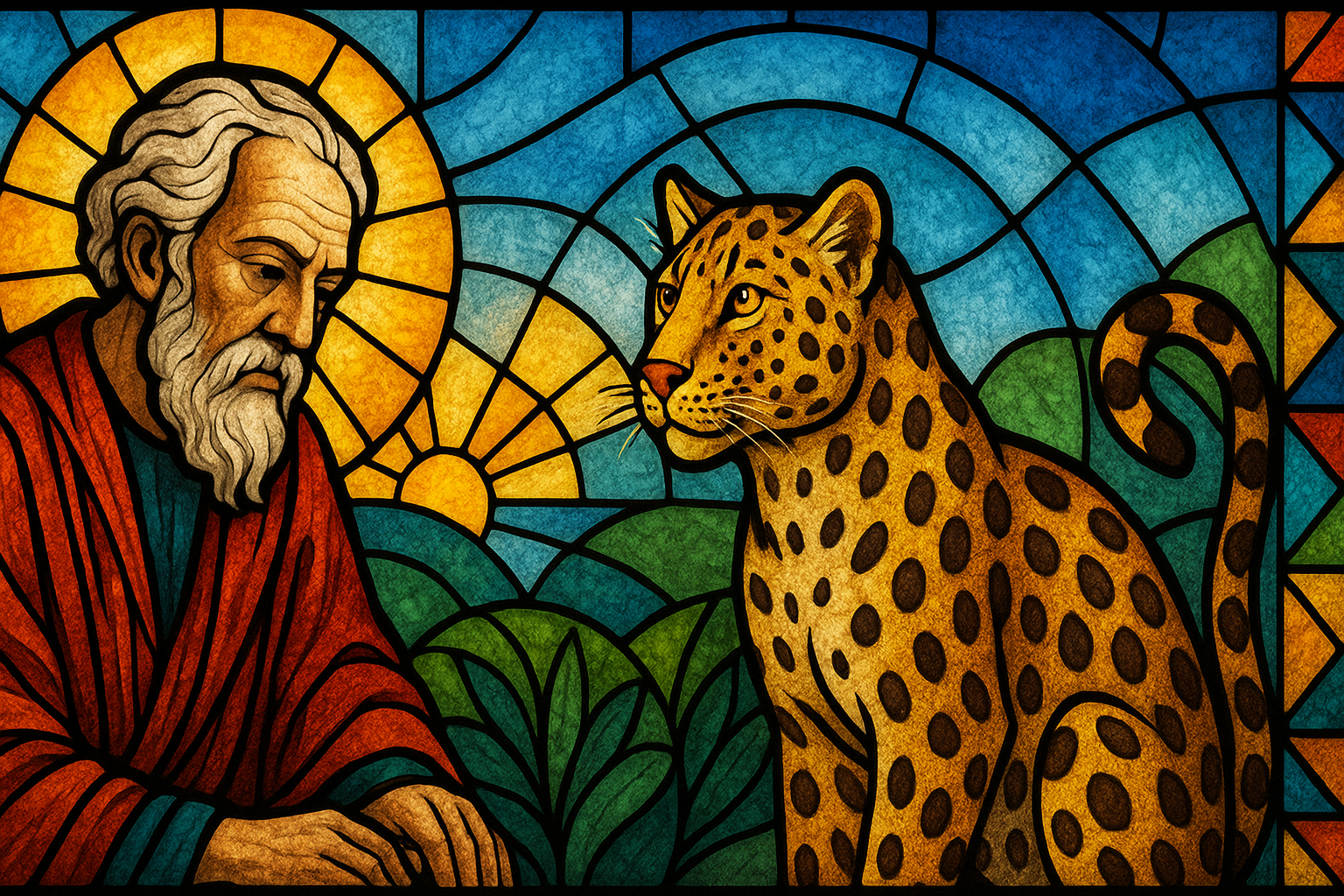
Never ask a child a rhetorical question in public. I recently heard of a church school teacher’s trial. She had just read the section from Jeremiah that goes, “Can the Ethiopian change his skin or the leopard his spots? Turning to the class with a big smile, she asked, “Well, children, can a leopard change its spots?” Everyone shook his head, except Johnny. He piped up with a loud “Yes! ” There was a long silence. The harried teacher, looking up toward heaven, said, ” All right, Johnny. Tell us how a leopard can change its spots. ”
Young John replied, “I don’t see why not. If a leopard is uncomfortable with the spot, can’t it change to a different spot?’
One of the subjects with which each of us must come to grips is human nature. Can it change? Can we, figuratively, change our spots? is it Feasible for human beings to become radically different? Or are we so locked into our past, by our gales, by our former ways of doing life, that we keep repeating ourselves?
The story of Jacob, in the Bible, certainly raises this basic question. During the next three weeks, we will be focusing on this scriptural superstar. Hopefully, tr) together we can look at sane prior assumptions about ourselves and perhaps learn more about God’s ways.
Turning to the Genesis account of Jacob, we see that the scriptural writes ” let it all hang out. ” They don’t spare us any of the sordid details. To teenagers, I would remind you that you don’t have to read Rolling Stone, or even People, to learn the dirt about superstars. Just read your Bible!
We first hear of Jacob through his birth. He is the second twin of twins , and because of the unfortunate uterine placemat, he misses out on the inheritance which goes to the older brother, Esau. at best, is a traumatic experience , but when you combine it with losing one’s legacy by a matter of a far minutes, you can see how this might color one’s existence.
Graphically, the Bible pictures Jacob as crawling out of Rebecca’s womb hanging on to esau’s heels, and we could say that his entire life consisted of grabbing clutching and trying to gain what was lost by his unfortunate placement at birth. Can’t you imagine the National Enquirer headlines for this youngster? We get an insight into jacob’s characters. Somehow he manages to be in charge of the food supply, and when his brother he saw his starving Jacob holds on until he gets him to sign over his inheritance. Not a very brotherly act but one of the themes of biblical history is that brothers, starting with the first pair, Cain and Abel, seemed always to be at odds. Maybe that’s why we have so much bloodshed throughout the Old Testament?
Getting back to Jake then. A few years later, following some bad maternal advice, Jacob tricks his blind father into giving him a blessing that was to go to esau. Does this by wearing a disguise of sheepskin. This may be the origin of the same, pulling the wool over someone’s eyes. Not surprisingly, after this scam, Jacob had to leave town and flee for his life. But Jacob, the flimflam artist is never one to let temporary setbacks dictate his future. He goes to his father-in-law and bilks him out of much of the family wealth. Jacob then returns and settles down to become one of our forefathers. It’s like having a horse thief in the family tree. You know he’s there but you don’t mention him in polite company.
In broad generalities, these are some of the scandalous facts about our grandfather Jacob. If we stop here, however, the real value will be missed. There are lessons to be learned beyond the gossip this morning, I want to concentrate on some insights about human nature.
Psychiatry since Freud has laid such great stress on the beginnings of human behavior that we can scarcely believe that our natures, basic personalities, can be transformable we may argue over whether it’s environmental or natural, but no one questions that somehow the past determines our future behavior.
I am reminded of the old fable of the turtle and the scorpion. The scorpion, being a very poor swimmer, asked the turtle to carry him across the river on his back. Are you mad? Replied the turtle you will sting me while I’m swimming and I’ll drown. My dear turtle, laughed the scorpion, if I were to sting you you would go down and I will go down with you now what’s the logic in that?
You’re right, cried the turtle hop on! The scorpion climbed aboard and halfway across the river gave the turtle a mighty sting and they began to sink in the depths. The turtle, with quiet resignation said, do you mind if I ask you something? You said there would be no logic in stinging me. Why did you do it? The drowning scorpion sadly responded, it has nothing to do with logic, it is just my nature.
Ohh don’t we think this is true to life? Our past determines, shapes, and molds our actions in the future and human nature pretty much stays the same isn’t that what we believe?
Ohh wait! As the old porgy and Bess song goes, it ain’t necessarily so. Particularly if we are dealing with God. One of the first lessons we learned, if we would relate authentically with the God of scriptures, is that change is always a possibility. When God is in the picture we cannot foreclose on any life or any situation. It is Christian to believe that human nature can be changed, how it works I do not know. I don’t believe there is any single way or stereotypical process. It can happen to thieves and princesses. It can happen in times of prosperity and times of want. It could happen 6000 years before Christ to a desert nomad, or it can happen 1986 years after Christ’s birth to a city resident. This I do know, change happens by the power and glory of God’s action.
The Greeks called this process or action, metanoia. The turning around of an individual by God’s grace. We often call conversion, although I am going to turn and leave it for television preachers, but by whatever name we want to label it the result is a new beginning, a complete change about, a change of personality in the process of being reborn.
The Christian faith affirms that we don’t simply mature or ripen away all of the Jews. Most of us, deep down, believe in maturation. What the gospel tells us is that people are lifted to a higher different, changed the way of life through the miraculous action of God. It is not a matter of doing more of the same, or better. This has to do with becoming other than we are.
Rudolph Volkswagen, the theologian that many of us studied in seminary put it this way, metanoia calls for understanding the discontinuity involved in life. Conversion, another name for this, is something more than A person being improved. And means that we received a new origin.
It’s difficult to analyze what happened to Jacob, as he is to understand what happened to Saint Matthew, to Saul of tarsus, to nicodemus, to Augustine, to Francis of Assisi to Martin Luther or to CS Lewis to name a few. They changed. They experienced metanoia. The love of him, the spirit of God, the glory of God touched their lives and they became different turned around people. The question today I would raise is do you believe in metanoia? Do you believe this can happen to you today or tomorrow or next week?
Martin buber has reminded us that there is a radical difference between the past and the future. We learned this lesson if we look closely at Jacob. His past didn’t dominate his future, at one point in his life, God reached out to the person who had defrauded his brother, deceived his father, and cheated is in law. God reached out, turned him around and said, you will be blessed and your descendants will go on forever. And you will be known as the grandfather of my people.
The word of the Lord is very simple, but I believe his profound implications, particularly so as we anticipate the New Years ahead in our church life. The word that change is possible and human nature, for remember the God we worship is the God of Abraham Isaac and Jacob, as well as Jesus. And remember, the God we worship is the one who brings new life out of old. And remember, the God we worship brings descendants, you and me, from the most I’m promising forbearers.
So let’s close our thoughts with this blessing. May the God of Abraham, Isaac and Jacob be with us all, this day and forevermore. Amen
Can Human Nature Change?
Can Human Nature Change?
September 21, 1998
Scripture: Genesis 27: 1-4, 18-36