God’s Call to Ordinary People
May 7, 2000
In her novel, Breathing Lessons, the author writes about Maggie, a suburban housewife. In one chapter, Maggie tells a friend about a conversation she had with Daisy, her teenage daughter.
“You know what she told me the other day? Maggie said. I was testing out the casserole before serving it for supper, and I said, ‘Tell me honestly. What do you think?”
“Daisy just sat there and studied me for the longest time. Finally, she said, ‘Mom, was there a certain conscious moment in your life when you decided to settle for being ordinary?'”
Maggie meant to go on, but her lips were trembling. The decision to settle for being ordinary is made, not, I think, in one moment, but daily by people like Maggie, as well as by people like you and me. It is also done by institutions, like parish churches.
We are here this morning to celebrate our patronal festival. We do this by remembering Philip, giving thanks for our community that is anything but ordinary, and today by welcoming newly confirmed members as well as a new clergy. That’s a pretty full agenda. So let’s get on with it.
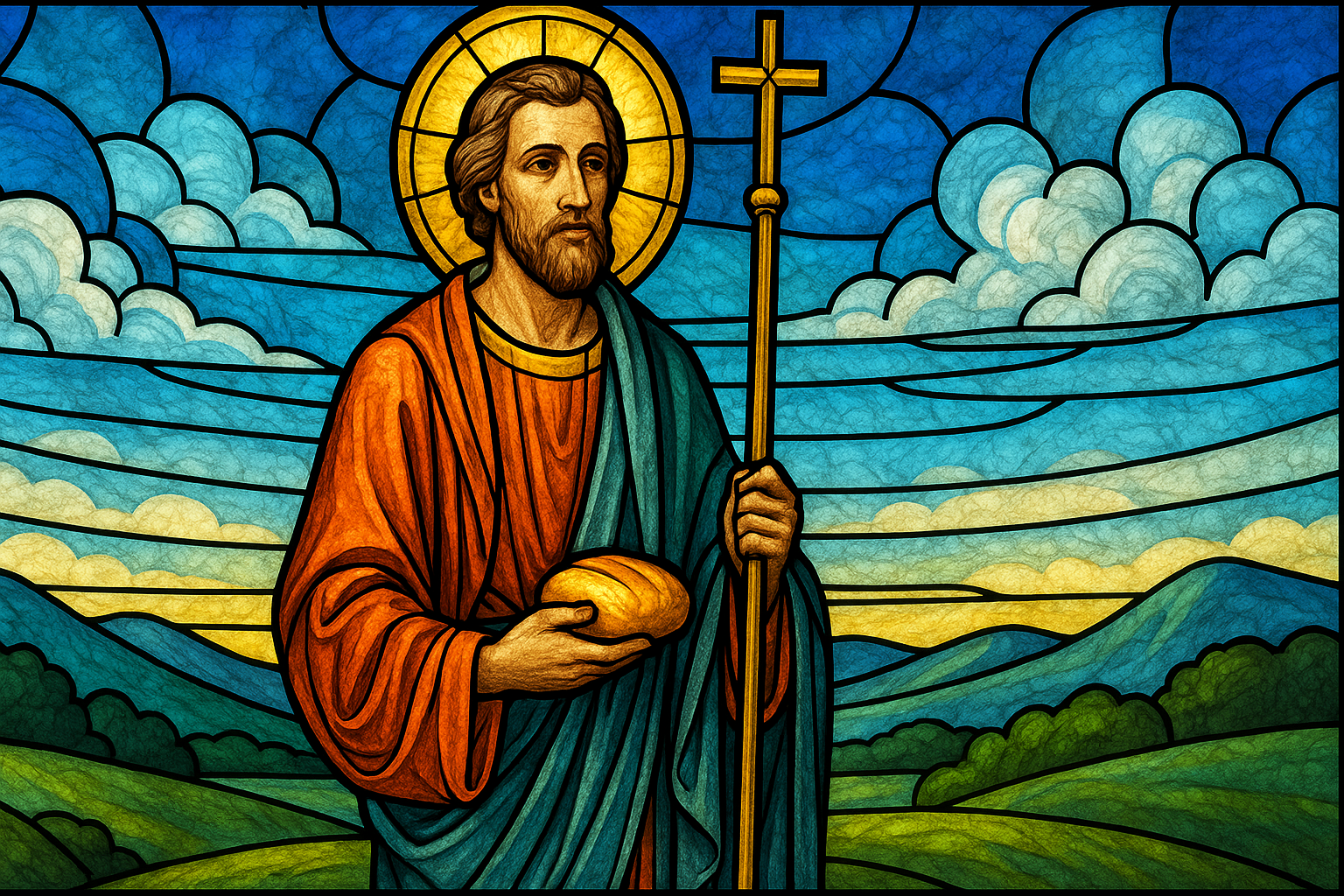
First, let’s focus on Philip, our Patron Saint. Year after year, I get up in the pulpit and preach on Philip. If the truth were told, we know little to nothing about him. He is mentioned a few times in the Gospels, like today, but only in minor ways. He is usually a foil to some truth that Jesus utters.
All that we can honestly say of Philip is that he was one of the twelve who followed Jesus throughout his short three-year ministry. Peter, we know about. He was that larger-than-life character who loved much and stumbled much. James and John were the close friends of Jesus. Thomas was a great doubter, and Judas was a great betrayer. But Philip, not much, very ordinary, delivered a few lines and was then lost to obscurity.
And after the Resurrection, we hear of Peter, standing up for the faith, being martyred in Rome. James, becoming the first Bishop of Jerusalem, headed up the church council. But of Philip, once again, almost nothing.
Did he become a great missionary, a church planter? Did he empower the church to serve the poor, defend the marginalized? Was he a spellbinding preacher, an evangelist like Matthew, Mark, Luke, and John?
What did he do?
We’re not told. So it seems like a good guess to suppose that whatever he did, it was fairly unimpressive. His Resume was probably pretty short. It’s safe to say he wasn’t a household name in the first church of Jerusalem.
The one thing we do know about Philip is that he followed Jesus throughout those difficult years. He chose to stick close to Jesus when it wasn’t the popular thing to do. And because of this connection, this loyalty, God was able to use Philip for a special ministry.
So, what we are celebrating today is not Philip’s great deeds, not his contribution to Christianity, but that God could use someone like Philip, a very ordinary person, for his special ministry, for extraordinary purposes.
Even Christians, who believe that God can call forth. people from dry bones, sons and daughters from the stones at their feet, babes from barren wombs, and new life from the tomb; even Christians don’t often believe that God could take an ordinary person like Philip and use him for a significant ministry but this is what God did.
That’s the story of Philip. But what about your story? You who bear the name of Philip. Do you believe that you are simply ordinary, just one of the crowd? Bound to do just run-of-the-mill kinds of things. Not worthy of God’s ministry. Not so. Today, we would say the Gospel reminds us that if we stick close to Jesus, we too will be called to do some special things for God, some ministry, whether it be recognized by the vast majority of people or not.
C.S. Lewis once wrote, “There are no ordinary people. You have never talked to a mere mortal. It is immortals with whom we joke, work, share, marry, love.” People are immortal insofar as they are connected to God. Philip was one of those who looked very ordinary, just another mortal being. But God made him into an immortal and used him for extraordinary purposes.
As some of you know, I’ve just come from a week spent with a clergy group made up of the 25 rectors of the largest and so-called most successful parishes in the country. We get together once a year and share our hopes and dreams, and mostly share our pain.
Looking at the group, you might say, this is a very common group of Episcopal clergy – not particularly charismatic, not particularly brilliant, although some are smarter than others. Most are doing very ordinary tasks, baptizing, marrying, and burying people. But underneath these ordinary people, they are doing extraordinary things. None of them has settled for being ordinary. Each one has in his own way a larger vision of ministry than the average cleric. Each one is quite sure of his or her connections to the one who calls us out to ministry. Each one is involved in exceptional work done by ordinary people.
An Apocryphal story. There used to be tour buses that brought people to see the beauty of our church. If you have been here a while, you may have seen those groups. They stream out of cars, vans, and buses. I’m told they used to come in the hundreds. We cut it out because of security problems.
One such group that came was made up of fourth graders. As they were getting the tour, a young girl raised her hand. She had a question. “Did anybody famous ever go to church here?”
The guide replied, “There have been famous people here, but we may not have known who they were.” Actually, the only thing that matters is not that we are known, but that we have been close to Jesus and therefore have been called to do extraordinary things. As C.S. Lewis has said, we’re all immortals, not run-of-the-mill mortals, doing remarkable things for God. We only have to recognize it.
Amen
God’s Call to Ordinary People
God’s Call to Ordinary People
May 7, 2000