Lostness and Foundness
Sept 17, 1995
Towards the end of Christopher Fry’s play, “The Lady’s Not for Burning,” we hear this strange dialogue:
Margaret says, “Have any of you seen that poor child, Alison? I think she must be lost.”
Nicholas replies, ‘Who isn’t? The best thing we can do is to make wherever we’re lost look as much like home as we can. Now don’t be worried. She can’t be more lost than she was with us.”
‘The best thing we can do is to make wherever we’re lost look as much like home as we can.” Is that what we do? Try to make it feel like home? Is this true of you and me?
As we begin our regular services and start our very busy year, I want to start by asking you an unsettling question. Are you lost?
For many of us, questions like that are at best unsettling. These are questions raised when the preacher stops preaching and starts to meddle. I have a hunch that our discomfort and our dis-ease come about because we are asked to give up on some of our cherished illusions – the illusion of self-sufficiency, the illusion of being in control, the illusion of security. There are very few forms of bondage that are more enticing and more devastating than holding to the illusion that we are safe, at home, in control of our lives
No wonder the God we worship is so small, so limited, so pathetic. We have no need for a Creator God, an all-powerful, all-loving God, as long as we cling to our illusions. All we need is a sort of cosmic bell boy who will come when paged.
Most of us, most of the time, perceive ourselves as self-sufficient, in control – heroes of our own autobiographies. Sure, we stumble once in a while, even experience failures. But basically, we believe that with a little bit of luck and a lot of hard work, we’re going to come out just fine. Thank you very much for asking.
Let me try to put it this way – it is hard for most of us to recognize the boundary line between “I can do it,” and “I need help.” Between “I’ll find my own way” and “I am lost.”
Our Gospel this morning contains a not very subtle hint that in order to find new life, we must start with death. In order to find a cure, we must first start with our sickness. The starting point for being found is to admit that you are lost. To come alive in ’95, we must start with the truth of our own helplessness.
Fred Buechner said it so well: “The Gospel is bad news before it is good news. It is the news that man is a sinner, to use the old word – that he is evil in the imagination of his heart, that when he looks in the mirror, what he sees is at least eight parts chicken, six parts phony, and a slob to boot.” “That may sound like tragedy,” Buechner continues, /but it is also good news because he is loved anyway – cherished, forgiven, bleeding to be sure, but also bled for – lost but also found.”
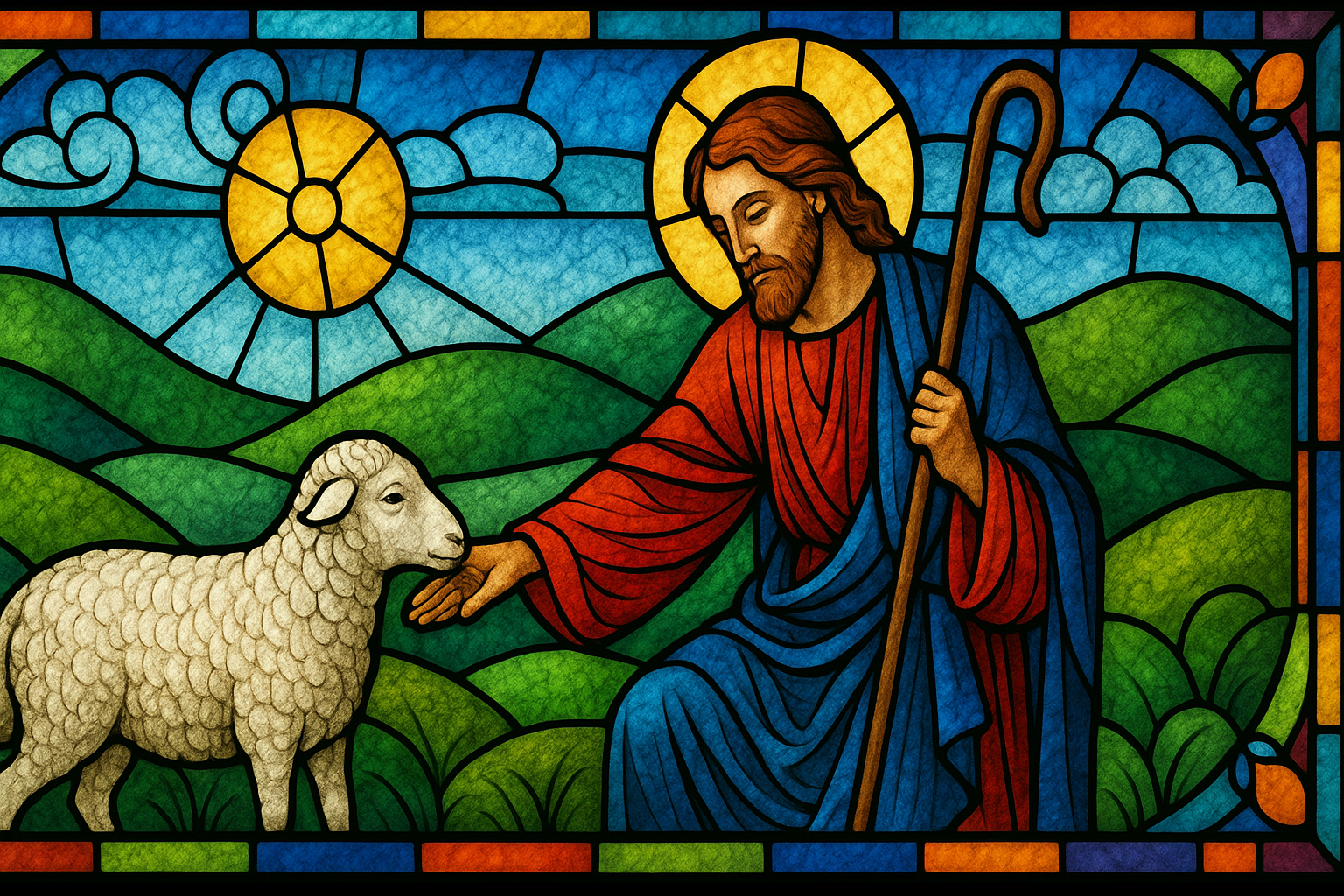
The parables that we read this morning, of the lost sheep and the lost coin, are stories about our own lives. They start with the lossness first – bad news. But they also show us that if there is no lostness, there is no foundness. If the one sheep had had the good sense that the 99 others had – not to get lost – there would have been no need for the rescue of the shepherd. If the coin had not slipped off a table and rolled into a dark recess, the housewife would not have spent the time or energy looking for it, not would she have rung up the neighbors to share her joy when she recovered it.
One of my tasks is trying to communicate what the church is all about. I do this by trying to figure out metaphors that might be useful for people who come up to me at cocktail parties and start off by saying, “Fm a Christian, but I don’t need the church.” The latest metaphor that I use is to say, ‘Well, the church is really the great lost and found department of God. It’s the place where lost people gather. And so, if you have already gotten your life together, if you’re in control of your destiny – then you certainly don’t need the church.”
Someone last Sunday, in the Gallery after church,
raised one of those zinging questions. I had just finished speaking about religion and how we needed to find it in our lives. ‘Well,” that person said, ‘Tell us where it was that you found religion.” The question was raised in a humorous vein, but it was one of those penetrating zingers that demands a response.
I think I would answer that question in two ways. First, I am still looking. And the other response is that I found religion when I began to tell the truth about my life. When I was younger, I thought that everybody was supposed to be self-sufficient. It wasn’t until I was able to stop clinging to my pedigree, or to my competence, or to my ego. (Incidentally, I recently read that e/g/o really stands for “edging God out.”) It wasn’t until I could put my ego aside and begin to tell the truth, giving up my illusions of immortality, wholeness, and control, that religion made any sense. And so, I would add a new way to describe the church. It’s a place of truth-telling – a place where we can be honest about ourselves. It’s a place where we come alive because we can be brutally honest with one another. Where we can admit that we are lost sheep, lost coins, sinners in need of mercy and forgiveness.
One last image – over the sabbatical, I spent a lot of time re-reading some passages from books that I had simply skimmed through. One of those books was Amy Tan’s delightful novel that was made, in part, into a movie called “The Joy Luck Club.” The book is a collection of stories. One of the stories is called “The Moon Lady.” It’s about a woman’s earliest memories – when she was four years old. She and her family were celebrating the Moon Festival. The legend says that on the night of the Moon Festival, you should tell the Moon Lady your secret desire or wish, and she will grant it. On this particular day, the little girl fell into the water and was rescued by strangers. Before being restored to her family, the little girl asked the Moon Lady that she be found. In the years that followed, she forgot her wish. But now, seventy years later, she says, “I remember everything that happened that day because it has happened many times in my life. I have felt lost and have earnestly asked to be found – and then I was found.”
Isn’t that it? The church is made up of people who are here to tell the truth about their lives, who can admit they are lost, and have a longing to be found. “Amazing Grace, How sweet the sound that saved a wretch like me. I once was lost, but now am found. Was blind, but now I see
And all the people said, “AMEN.”
Lostness and Foundness
Lostness and Foundness
September 17, 1995