On Turning Inward and Turning Outward
Nehemiah 8: 1-3
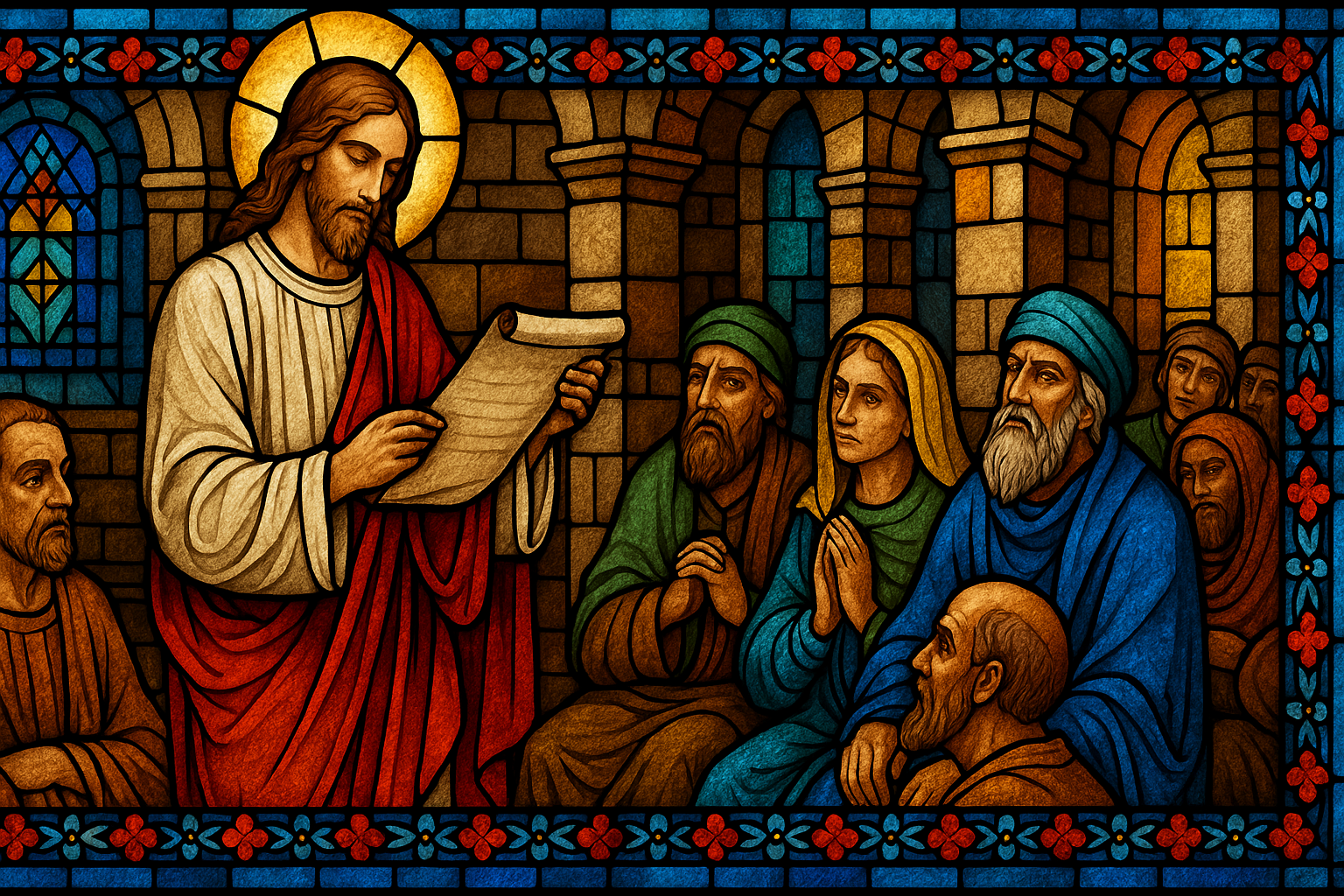
Luke 4: 14-21
September 12, 1999
I am about to ask you a number of questions, but don’t worry. This is not a quiz where you have to hold up your hand and get a grade. But, if you answer these questions, it will put this morning in a better perspective. Here goes.
When the scripture was read, both the Old Testament and the Gospel, were you listening? Or did your mind wander?
Did you notice any differences between the passage from Nehemiah and the passage that Jesus chose for the text of his first sermon in his hometown?
And finally, as you listened to the Bible being read, did you wonder what the preacher would do with those texts?
The people sitting in the synagogue in Nazareth. probably were doing similar things as many of you. Some are doing grocery lists in their heads, some day-dreaming, others planning the next week others thinking about the coffee hour. Few were very attentive, and it wasn’t until Jesus stood up to preach that they became much aware of the problems in their religious life.
The people of Nazareth were comfortable, in sync with the words of Nehemiah, and therefore the passage from Isaiah went right over their heads, or as we often say, it went in one ear and out the other.
Let me give you a little historical background so that you might grasp the contrast between the two passages. Our ancestors had been conquered and sent into exile for 50 long years. It wasn’t until a Persian named Cyrus conquered the Babylonians that the people of Israel were allowed to return home.
When they finally got home, they were dispirited and feeling adrift. What did they need to do, now that they were beginning again? It’s like having been away on a long trip, and when you come home, everything seems different. You have to regroup and set some new priorities.
Our ancestors had many voices giving advice during troubled times. There was no lack of people, writers, preachers, prophets, and politicians, all willing to share their insights. One such person was Isaiah, who wrote what we often call the servant songs. These songs suggested that the people of God must act like servants to the world around them. Isaiah argued that there was only one God, so there must be only one people; and those who knew God best should live their lives for others.
This message of turning outward, reaching out, and becoming involved in the world was heard, registered, and quickly forgotten; whereas, the words of Nehemiah, which are really the work of two men, Ezra and Nehemiah, became the dominant philosophy of the day. Their influence was felt, not only religiously, but also in the culture as a whole. Ezra was a religious teacher, a priest. Nehemiah was the governor of Jerusalem. These two men recognized the difficult time. It was a time of transition where everything was being called into question. They counseled turning inward. They argued that in times of transition, people ought to care for themselves, look out for number one, to concentrate on ritual and rules while they waited for the Messiah. They said that there had been too much intermarriage and that the Jewish people were losing their identity. Furthermore, the religious practices were becoming lax. Their prescription was to call for a renewal movement of personal, private piety and to encourage a sense of isolation from the world’s problems. Keep your hands clean and don’t get involved in the messes of the world, was their considered advice. They counseled a strategy of withdrawal. Nehemiah built a wall around the city to keep out the undesirables. Ezra had all the foreign spouses ejected so that people would live with only their own kind.
Ezra and Nehemiah had their advocates then as well as now. There are many voices today that say we’re living in a time of transition and the answer is to turn inward, withdraw from the noises of the world. It’s more important to study the Bible than to know about the situation in Kosovo. Preachers ought to separate religion from politics. Church members ought to concentrate on proper liturgy rather than talk about marginalized people, or equitable wages and minimum wage scales.
But that wasn’t the message that Jesus preached in Nazareth. His text came from Isaiah as he began his ministry. And many people hardly registered the words when they were read.
All of a sudden, the preacher stood up and said, “God has anointed him to bring good news to the poor, to proclaim release for the captives, to let the oppressed go free.” The morning’s sermon was about turning outward. He saw that Isaiah was right. Ezra and Nehemiah were wrong. Leaders can make mistakes. Even the best-intentioned of us can be wrong about what is right.
Good people, as we come together at the beginning of our year, when we learn about our many activities, I ask you to take seriously the words of Isaiah. I ask you to consider turning outward and not just turning inward. There are many ways to do this. Today I ask you to sign up to build a house, whether you know how or not. I ask you to build a house in the Old Pascua Village section of town for some people who may not look like your neighbors or the person in
the next pew. I ask you to build a house this year under the direction of Habitat for Humanity. This is a concrete way to proclaim “The Year of the Lord,” to act out a servant ministry It’s my dream that every member of this parish be involved in some way in the building of this house. It’s my dream that at the end of the year, we as a parish can proclaim that this truly was an acceptable year of the Lord
Proclaiming Isaiah’s text was what Jesus did. And the people must have heard the sermon, if not the lesson. At the end of the sermon, the church people didn’t simply shake his hand and say nice things – things like, “Good sermon, Roger. Are you going to publish those words?” No, instead, they rose up and threw him out of the church and were going to throw him off a cliff. That’s never happened to me. Maybe I’ve been preaching too much like Nehemiah??
Amen
On Turning Inward and Turning Outward
On Turning Inward and Turning Outward
September 12, 1999
Scripture: Nehemiah 8: 1-3, Luke 4: 14-21