Who are the Good Guys, and How can you Tell the Right Ones from the Wrong Ones?
Numbers 11: 4-6, 10-16, 24-29
September 29, 1991
A number of parents experienced A traumatic moment this month, they watched a child leave home, either for college or maybe for first grade. I imagine as they watched them leave the house, they wandered to themselves, have I prepared them adequately for all they will face? Because, none of us do the parenting tasks perfectly. It is not unusual that sooner or later these same children will come back and ask, Why did you not tell me this or that? I never heard a word about that as I was growing up. The world out there is large and confusing.
This happens to ministers as well as to parents. People come up to us and say, Sunday school and confirmation classes didn’t prepare us for the world out there. Why didn’t you help me in distinguishing the good guys from the bad guys, or at least aid me in thinking ethically?
This is the third in our series on the questions that life raises. This morning, we’re focusing on how to distinguish the good from the bad, the right from the wrong, the good guys from the bad guys.
In our Old Testament lesson, we have a fascinating account about two people named Eldad and Medad, they sound like an old time vaudeville act. Instead of a song and dance combination, we’re told they were prophets, and they began to say important things when Moses was away from camp. To make matters worse, scripture tells us, they hadn’t gone to the tent. A moose translation of this would be that they hadn’t been to seminary, and they hadn’t been properly ordained. And therefore, Joshua says to Moses, Go forbid them, they are not of us.
The same thing happens in our New Testament lesson. John reports to Jesus, we saw a man casting out demons and we stopped him. He was not following us. In both these instances, the validity of the act depends upon the legitimacy and the correctness of the person. So what’s right and what’s wrong? According to Joshua and John, it depends on one’s resume. The ins are the only ones who can be counted on to do or say the right thing.
Saint Anthony of the Desert writes, The time is coming when men will go mad and they will see someone who is not mad and they will attack him, saying, you are mad, you are not like us. That’s the kind of madness I see characterized by the Johns and Joshuas, the madness of not being able to recognize the good, not being able to discern the prophet, the minister, the healer, unless he or she looks, acts, and believes in the same things as we do.
This summer I was in California near Disneyland. Whenever I’m out in that part of the country I always find something that speaks to my sermons. I wasn’t disappointed. While walking along the street, I saw a T-shirt with the words, 3,000,000 lemmings can’t be wrong.
Well, they can. We can all suffer from a madness that can’t distinguish the good from the bad. we can plunge forward into self-destruction, fail to listen to our voices, and fail to discern the prophets of our day.
I read some interesting words this week, from a woman by the name of Mary Hatch. She’s radical, and thought by many to be beyond the pale in Christian circles. She’s quoted as saying, what is wrong with the mainline churches? In a nutshell, is that they give out the worst schools in the culture. The preaching and teaching people get in church simply underscores what they get from newspapers and television. They tell people that what it means to be a good human being, a good Christian, is to fit in as best they can. In short, the church stifles the imagination and pacifies people’s emotions and therefore, church people often miss the prophetic word.
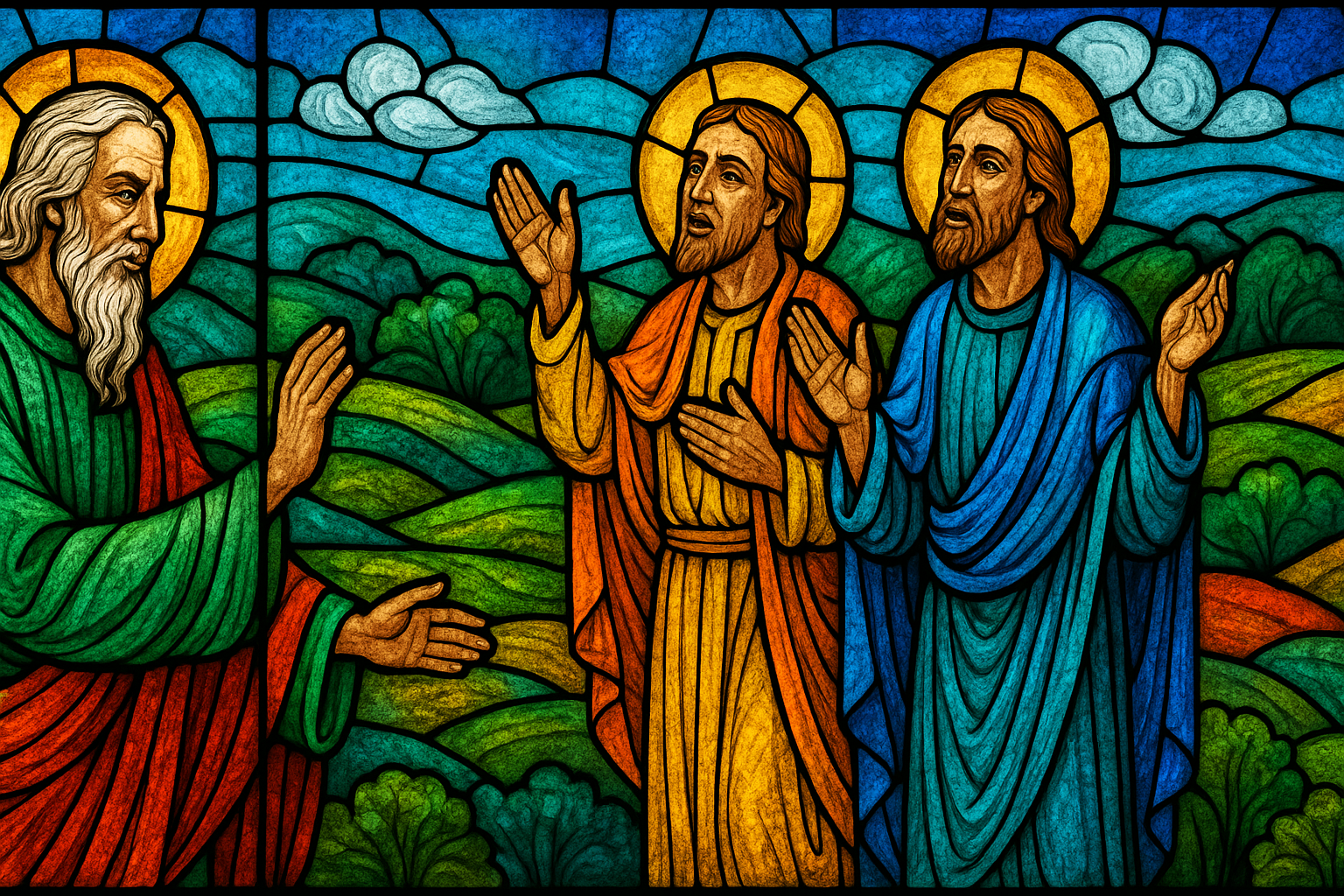
The world calls us out of our narrow, stained glass box hall to a wider vision of the world. We should be more concerned with bringing together the broken fragments of our society than in arguing the relative merits and personal morality. The merry hatches of the world are more concerned with good society than with good sexual conduct. The merry hatches of the world are part of the prophetic minority as opposed to the moral majority.
Let me be very personal here. I believe we can’t hear the Mary hatches and other prophetic voices because we have opted for privatized, individualistic, paternalistic morality. Doing the right thing means not doing harm to others and letting others be. Doing the right thing is completely divorced from any public agenda, any societal goodness.
By and large, salvation for church people consists of taking care of our soul and making sure we’re good enough to get through the pearly gates. But what if, what if there were more? What if getting into heaven is dependent upon your getting there also? If my healing depended upon your healing? What if we really believe we were cells interconnected to a great body? What would that mean toward a global perspective toward pushing out our horizons?
Can you see how we’re getting into hot water here, how we’re leaving the private sector and going into the public arena? Can you see how the prophets are those who look critically at the institution of the day and look to more than individual goodness? Can you see how that makes church people nervous?
Going back to those two prophets with funny names, we read that they prophesied. We don’t know what they said, but we can be sure it was more than just fit in. Or, be a good person. Then Joshua, the minister of Moses, one of those with the right credentials, said, Shut them up. But Moses said, are you jealous for my sake? Would that all the Lord’s people were prophets if the Lord put his spirit upon all of them would that they all would do battle for the Lord’s sake.
Moses understood that if you become concerned with who’s in and who’s out, who’s legitimate and who’s suspect, who’s right and who’s wrong, you inevitably begin to narrow your vision. Moses reminds Joshua that doing the Lord’s work, establishing the Kingdom, is not an exclusive job for chosen people. Ministry is wildly inclusive. It’s the work of us all and the test of rightness and wrongness is not in Regency but rather in service to the wider community.
In England, in the 19th century, when the industrial revolution began to grind down, the poor church people used to say, Isn’t it a shame that those mills existed. But no one challenged the institutions and society that produced that situation. And then a dreamer, a poet, a Mystic, a prophet by the name of William Blake had his words put into music, it’s always been my favorite hymn. Let’s let Blake have the last word, maybe we can stretch our vision
Bring me my bow of burning gold,
bring me my arrows of desire,
bring me my spear, ohh clouds unfold,
bring me my chariot of fire.
I will not cease for mental fight,
nor shall my sword sleep in my hand,
till we have built Jerusalem in England’s green and pleasant land
Would that all the Lord’s people were prophets
Amen
Who are the Good Guys, and How can you Tell the Right Ones from the Wrong Ones?
Who are the Good Guys, and How can you Tell the Right Ones from the Wrong Ones?
September 29, 1991
Scripture: Numbers 11:4-6, 10-16,24-29